How Will Urban Population Boom Boost Construction Equipment Market Growth?

The construction equipment market growth between 2021 and 2030 will be primarily driven by rapid urbanization around the world. The accelerating urbanization rate will increase the demand for housing projects and propel investments in infrastructure development. In recent years, the surging use of electric and fully autonomous equipment has become a key market trend. Usage of autonomous equipment increases the productivity of the construction sector, offers higher worker safety on site, and addresses the problem of skilled labor shortage.

The accelerating urbanization rate is one of the key growth drivers of the construction equipment market. The World Bank Group states that around 55% of the global population currently lives in cities. It is also estimated that the global urban population grew from 4.28 billion in 2019 to 4.358 billion in 2020. The organization also forecasts that nearly 7 out of 10 people in the world will reside in urban areas, by 2050. The population growth in urban localities will result in the wide-scale construction of housing, industrial, and commercial structures, owing to which construction equipment demand will increase considerably. 

According to P&S Intelligence, within the product segment, the earth-moving machinery category is expected to account for the largest share in the construction equipment industry throughout this decade. The dominance of this category can be attributed to the improved grip offered by this construction equipment on snow and in the mud. The surging use of this machinery in the construction sector is also credited to its wide application bases, such as trench digging, demolition of structures, soil grading, laying foundations, and removing rocks and dirt. 

Geographically, the APAC construction equipment market will generate the highest revenue in the foreseeable future. As construction projects are the backbone of economic development, a boom in the construction sector is a key contributor to the market growth in the region. Moreover, the growth of the sector in APAC is driven by the mounting investments being made by governments in construction activities. Additionally, the rapid urbanization in China, South Korea, India, and Japan will also drive the demand for construction equipment in these countries. 

Thus, the market growth during this decade will be driven by the booming urban population.

Read more: https://www.psmarketresearch.com/market-analysis/construction-equipment-market
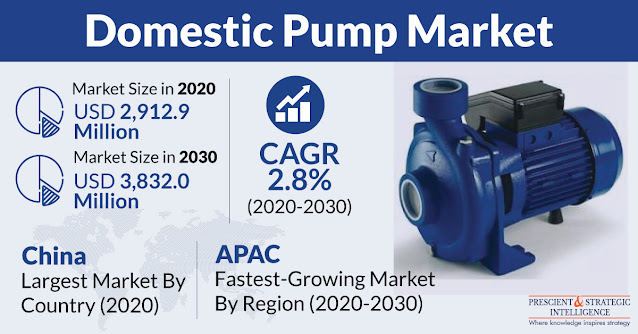
Groundwater Depletion Supporting Expansion of Domestic Pump Market

The global domestic pump market revenue stood at $2,912.9 million in 2020, and it is predicted to rise to $3,832.0 million by 2030. According to the estimates of the market research company, P&S Intelligence, the market will grow at a CAGR of 2.8% from 2021 to 2030. The surging construction activities in the residential sector, increasing number of high-rise buildings, where pumps are required for maintaining the water pressure till the upper storeys, depletion of groundwater, and rapid urbanization are the major factors fueling the growth of the market. 

As per the Our World in Data, the global population will surge to 8.2 billion and 8.6 billion by 2025 and 2030, respectively. The surge in the worldwide population would create burden on the existing water infrastructure, which supplies drinking and utility water. In addition, a large number of people are rapidly shifting from rural areas to cities and towns every year. As per the World Bank, the share of the urban population in the global population surged from 55.2% to 56.1% from 2018 to 2020. 

Owing to the rising urbanization rate, many governments across the world are focusing on improving the infrastructure, which would subsequently fuel the demand for domestic pumps, thereby causing the expansion of the domestic pump market. The rapid depletion of the groundwater level is another major domestic pump market growth driver. As per the Population Action International, nearly 2.8 billion people in as many as 48 countries are predicted to experience water scarcity by 2025.

This category is predicted to demonstrate the highest growth rate in the market in the coming years. This is ascribed to the large-scale usage, inexpensive nature, and excellent pumping efficiency of these pumps. Globally, the Asia-Pacific region dominated the market in the past. This was because of the presence of a large population and surging number of ongoing housing projects for accommodating the soaring population in the region. Furthermore, the abundant availability of power for operating these pumps is also driving the growth of the domestic pump market in the region.

Hence, it can be said without any hesitation that the sales of domestic pumps will surge sharply in the coming years, mainly because of the rising requirement for potable and drinking water, on account of the soaring urban population and increasing construction and infrastructure development projects in several countries. 

Read More: https://www.psmarketresearch.com/market-analysis/domestic-pump-market

How Is Urban Population Propelling Non-Destructive Testing and Inspection Use?

The Population Division of the U.N. Department of Economic and Social Affairs (UNDESA) predicts that the global urban population will rise by 2.5 billion by 2050, in comparison to the 2018 population. The 2018 Revision of World Urbanization Prospects reveals that nearly 68% of the world population will reside in urban localities by 2050. As per this report, 90% of this surge will be recorded in Asia and Africa. The rising urban population will result in the large-scale construction of residential and commercial structures globally.

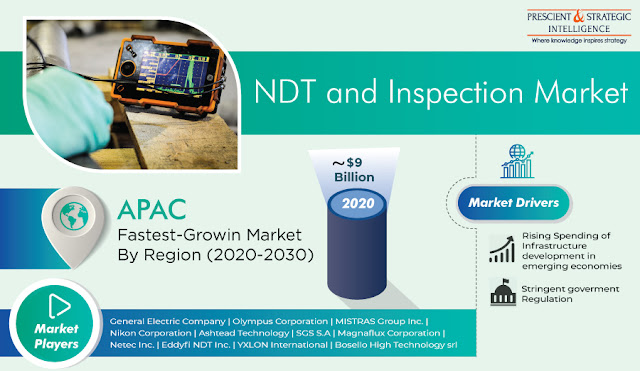
Thus, the increasing construction activities will help the non-destructive testing and inspection market progress during 2021–2030. According to P&S Intelligence, the market generated a revenue of $9 billion in 2020. Construction companies use NDT inspection methods to detect and assist in the repair of corrosion and cracks to avoid any unprecedented damage. The adoption of this testing method helps prevent road or bridge closure or a potential catastrophic failure. Owing to these advantages of NDT and inspection methods, construction firms are using them for infrastructure inspection and structural health monitoring.

In contemporary times, the non-destructive testing and inspection market has been dominated by NDT Global GmbH, Cygnus Instruments Ltd., Fischer Technology Inc., Bosello High Technology srl, T.D. Williamson Inc., Sonatest, Eddyfi NDT Inc., Magnaflux Corporation, SGS S.A., Ashtead Technology, Nikon Corporation, MISTRAS Group Inc., Olympus Corporation, and General Electric Company. In recent years, these companies have engaged in the introduction of novel products and services. For example, in March 2021, Nikon Corporation introduced a new CT/X-ray system, which is equipped with half-turn CT, rotating target 2.0, auto filament control, local calibration, and quick-change features. 

In the coming years, the Asia-Pacific region will emerge as a significant user of NDT and inspection services, equipment, and methods. This will be on account of the improving infrastructure sector and increasing automation in the manufacturing industry of India and China. The aerospace and defense, oil and gas, and construction industries use these testing methods to ensure work quality and employee safety, as NDT helps protect staff and equipment and assists enterprises in following the regulations and requirements. 

Therefore, the rising construction activities and soaring infrastructure investments will accelerate the use of NDT and inspection methods in the forthcoming years. 

Food and Beverage Companies Using Chitosan as Food Preservative to Reduce Toxicity

Chitosan refers to a semisynthetic material that is obtained through the deacetylation of chitin. It comprises N-acetyl-glucosamine (acetylated monomer) and glucosamine (deacetylated monomer) monomers, which are linked through β-,4 glycosidic bonds. At present, a considerable volume of this material is used as food preservative to extend shelf life of perishable food items, owing to its non-toxic property. Unlike traditional preservatives, such as formalin, chitosan is more biocompatible and does not lead to cancer, lung diseases, and skin disorders.

Thus, the increasing use of chitosan as food preservative will support the chitosan market growth during the forecast period (2021–2030). Moreover, the surging use of this chemical in drug delivery systems, on account of its ability to reduce enzyme degradation, facilitate the uptake of drugs by target tissues or cells, prolong cycle time, and increase water solubility and stability of drugs, will also contribute to the market growth exponentially. According to P&S Intelligence, the market generated $1.8 billion revenue in 2020.

In addition, the biochemical industry also uses chitosan as a vital raw material for bioactive agents, due to its biocompatibility. Biochemical companies use this material to produce bioactive materials like films, sponges, hydrogels, and fibers. Apart from the food and beverage and biochemical industries, a large quantity of chitosan is also used in the cosmetics, agriculture, and water treatment industries. Furthermore, this semisynthetic material is used in the production of protective clothing and fiber reinforcement composites. Moreover, industrial, food, and pharmaceutical grade chitosan used by end users are derived from multiple sources of chitin. 

The source segment of the chitosan market is classified into shrimp, lobster, crab, prawn, and others, such as squids, krills, fungi, and centric diatoms. Under this segment, the shrimp category accounted for the largest market share in 2020, and it is also expected to continue witnessing this trend throughout the forecast period. This can be owed to the high content of chitin in shrimp shells and extensive demand for shrimp chitosan from water treatment plants. Additionally, the increasing use of shrimp chitosan as an ingredient in food preservatives will also contribute to the market growth in this category, globally.

Globally, the Asia-Pacific chitosan market generated the highest revenue during the historical period (2015–2020), and it is also expected to exhibit the fastest growth during the forecast period. This can be credited to the surging focus of market players on R&D and the increasing prevalence of chronic diseases in the region. Additionally, the mounting investments being made by private and government organizations of India, China, and Malaysia in the water treatment sector will also steer the demand for chitosan in APAC.

Therefore, the surging need for non-toxic food preservatives and the burgeoning demand for bioactive materials are expected to fuel the consumption of chitosan across the world.

Expanding Electric Vehicle Stock Generating Global Demand for Oxygen-Free Copper

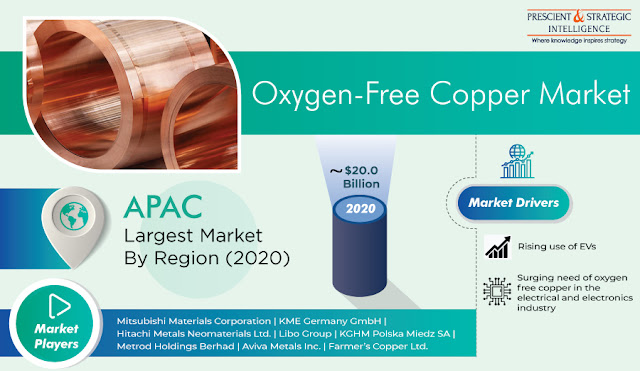
The Government of France has set up a target of increasing plug-in electric vehicle (PHEV) (passenger vehicles) and battery electric vehicle (BEV) (passenger vehicles) stock to 1.8 million and 3 million, respectively, by 2028. Likewise, Indonesia aims to expand the electric vehicle (EV) stock (passenger vehicles) to 2 million units by 2030. Similarly, the New Zealand government aspires to introduce 64,000 EVs (passenger cars) by 2025. The increasing number of EVs, on account of the growing need to reduce vehicular emissions, will, therefore, augment the need for oxygen-free copper products worldwide.

Moreover, the expanding electrical and electronics industry will also steer the oxygen-free copper market growth during the forecast period (2021–2030). According to P&S Intelligence, the market generated nearly ~$20.0 billion revenue in 2020. The growth of the electrical and electronics industry can be ascribed to the rising demand for consumer electronics, especially in developing countries, due to the mounting disposable income of people. For instance, the gross national disposable income of India increased from INR 1,73,15,933 crore during 2017–2018 to INR 1,92,37,943 crore during 2018–2019.

In the coming years, the electrical and electronics industry will utilize a significant volume of oxygen-free copper wires, busbars, strips, and rods to meet the booming demand for superconductors and semiconductors. Additionally, the surging power demand, on account of the growing global population, will also create a huge requirement for various types of oxygen-free copper products. In recent years, oxygen-free copper wires have been consumed in the highest quantity, due to their large-scale usage in vacuum seals, vacuum capacitors, vacuum interrupters, and microwave tubes. 

The grade segment of the oxygen-free copper market is bifurcated into oxygen-free and oxygen-free electronic. Under this segment, the oxygen-free bifurcation held the larger market share in 2020, and it is projected to maintain its lead in the forecast years as well. The dominance of this category can be attributed to the increasing use of oxygen-free copper in electromagnets, magnometers, and other semiconductors and magnifying demand for EVs, owing to the rising government support toward the EV industry. 

In recent years, oxygen-free copper providing companies have actively focused on acquisitions to offer this material to a greater number of customers. For instance, in February 2021, Mitsubishi Materials Corporation acquired a minority share in Mantoverde copper mine of Chile for $275 million. With this acquisition, the company will have a constant supply of high-quality copper concentrates with minimal impurities and a sustainable raw material portfolio of e-scrap and clean copper concentrates.

Therefore, the surging adoption of EVs and prospering electrical and electronics industry will facilitate the usage of oxygen-free copper all over the world in the upcoming years.

Why Is Cosmetic Chemical Demand Highest in Asia-Pacific?

From $457.734 in 1960, the global per capita income has risen to $10,910.084 in 2020. This means that on average, people have more to spend than 60 years ago. As a result, the sale of several products and services that were earlier only purchased via the wealthy, such as electrical appliances, consumer electronics, and automobiles, are being widely bought by the middle and even lower classes. Another kind of products that are now gaining a widening customer base are cosmetics.

Thus, P&S Intelligence expects the cosmetic chemicals market size, which was already $20.0 billion in 2020, to grow significantly in the years to come. Cosmetic is anything with or without actual health benefits that is used to enhance the appearance. Apart from the rising disposable income, the increasing appearance consciousness is propelling the usage of such products. The surge in the appearance consciousness is attributed to the growth in the influence of the Western culture via TV shows, magazines, and social media.

Further, with time, people have become aware of the ill-effects chemicals can have on the skin, which is why they are going for cosmetics marketed as organic and natural. This is prompting key cosmetics companies as well as chemical firms, such as The Dow Chemical Company, Ashland Inc., Givaudan S.A., Eastman Chemical Company, BASF SE, Lonza Group, LANXESS Deutschland GmbH, Solvay S.A., P&G Chemicals, Evonik Industries AG, Croda International Plc, Cargill Incorporated, and Bayer AG, to engage in extensive research and development (R&D) to come up with products that carry the same functional characteristics as conventional ones, but do not harm the skin.

Asia-Pacific is the dominant cosmetic chemicals market across the globe. Although North America and Europe have a higher disposable income and brand awareness, APAC registers the highest cosmetics sales because of its huge population. Therefore, to target the regional populace with cost-effective products, major cosmetics companies have their production plants here, which propels the consumption of the various chemicals that go into such products. Within the region, China is the largest cosmetics chemical consumer as it is home to the factories of many cosmetics manufacturers.

Hence, with the growing cosmetics production, the demand for associated chemicals will boom.

How is Construction Sector Steering Engine-Driven Welder Demand in U.S.?

The U.S. Energy Information Administration (EIA) states that around 535 million short tons of coal were produced in 22 states of the country. Further, the U.S. Geological Survey reveals that 190 tons of gold were mined in the country in 2020. The organization also states that 150 tons of beryllium were produced in the country in 2020. The surging mining activities in the U.S. will create an enormous requirement for engine-driven welders, as they are required to repair mining machinery, remove damaged parts or cracks, and generate electricity for power auxiliary operations in the absence of base electricity.

Additionally, the rising construction activities, primarily on account of the increasing number of housing projects, will help the U.S. engine-driven welder market grow at a CAGR of 6% during the forecast period (2019–2024). According to P&S Intelligence, the market was valued at $133.1 million in 2018, and it will generate more than $188.9 million revenue by 2024. The U.S. Department of Housing and Urban Development and the U.S. Census Bureau approved the construction of 1,598,000 buildings in October 2021.

The amperage segment of the U.S. engine-driven welder market is classified into 800 A and above, 600 A–799 A, 500 A–599 A, 400 A–499 A, 300 A–399 A, 200 A–299 A, and less than 200 A. Among these, the 300 A–399 A category generated the highest revenue in 2018, and it is also expected to exhibit the fastest growth throughout the forecast period, due to the wide application base of 300 A–399 A engine-driven welders in the pipeline works, commercial, industrial, and residential construction activities, and agricultural and industrial machinery maintenance.

Currently, the U.S. engine-driven welder market is consolidated in nature, with the presence of few players, such as Miller Electric Mfg. LLC, Airgas Inc., One Source Equipment Rentals Inc., A&B Welding Supply, Lincoln Electric Holdings Inc., Middlesex Welding Sales, Barnes Welding Supply, Hobert Welding Products, Cryo Weld, Service Welding Supply, WELDING SUPPLIES FROM IOC, Norco Inc., and TS Distributors Inc. In 2018, Hobert Welding Products, Miller Electric Mfg. LLC, and Lincoln Electric Holdings Inc. accounted for over 85% market share. 

Therefore, the expanding mining sector and surging construction activities will facilitate the adoption of engine-driven welders in the U.S. in the foreseeable future.

Mushrooming Biofuel Production Fueling Seed Treatment Demand

The soaring demand for food products, on account of the mushrooming population across the globe, is fueling the requirement for seed treatment products, as they assist in improving the productivity of crops. As per the United Nations (UN), the global population will surge from 7.7 billion in 2020 to around 8.9 billion by 2030. Seed treatment products are also used for protecting young plants and seedlings from various diseases and ensuring high crop yield.

Besides the aforementioned factor, the burgeoning requirement for biofuels, owing to the increasing environmental concerns over the deteriorating air quality level and escalating pollution levels, is also fueling the expansion of the seed treatment market. Different types of plants are used for producing biofuels. For example, bioethanol is made from the fermentation of the sugar produced from starchy crops, such as sugarcane. Thus, in order to make high quality biofuels, the seeds of the plants from which the sugar or oil is to be derived must be of high quality.

Across the world, the demand for seed treatment products was observed to be the highest in the Asia-Pacific (APAC) region in the years gone by and this trend is predicted to continue in the coming years as well. This is credited to the surging farming activities, including high-volume crop production, especially in Vietnam, India, China, Australia, and South Korea, and skyrocketing demand for high-quality agricultural produce to cater to the region’s large population.

Globally, the major players operating in the seed treatment market, such as Bayer AG, BASF SE, Germains Seed Technology, Croda International Plc, FMC Corporation, Novozymes A/S, Verdesian Life Sciences LLC, and Eastman Chemical Company, are focusing on product launches in order to gain an edge over their rivals. For example, Corteva Inc. developed Lumivia CPL, which is a non-neonicotinoid-based seed treatment product for peas, lentils, and cereals, in March 2020. This product uses an advanced method for managing pests.

Hence, the demand for seed treatment products will skyrocket in the coming years, primarily because of the surging need for higher agricultural productivity and biofuels across the world.

Why Are Automakers Using Physical Vapor Deposition Technology?

Physical vapor deposition (PVD) refers to a vacuum deposition process that can be used to fabricate thin films and surface coatings. In this process, the material changes from a condensed phase to a vapor phase and then again to a thin film condensed phase. Conventionally, PVD has been utilized at the industrial scale and combined with multiple methods to produce coatings with superior characteristics. In recent years, advancements in nanoscience have made the PVD technique more useful for the fabrication of micro-structure and nanostructured coatings.

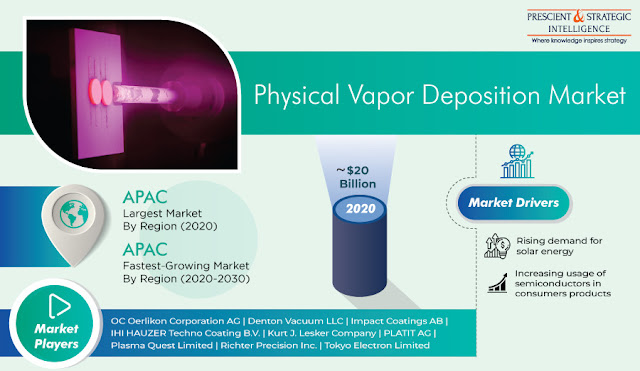
Currently, solar selective coatings produced by using the PVD technique are being consumed in large quantities, due to the rising focus of governments and individuals on generating electricity through solar energy. Coatings with high absorptance and low thermal emittance are being applied on solar panels to harness solar energy. Thus, the increasing deployment of solar cells and panels will catalyze the physical vapor deposition market growth during the forecast period (2021–2030).

In recent years, PVD equipment manufacturers, such as OC Oerlikon Corporation AG, Angstrom Engineering Inc., PLATIT AG, Denton Vacuum LLC, Plasma Quest Limited, Sulzer Ltd., Kurt J. Lesker Company, Tokyo Electron Limited, Advanced Energy Industries Inc., IHI HAUZER Techno Coating B.V., Applied Materials Inc., and Impact Coatings AB, have focused on introducing new products and acquisitions to augment their revenue. For instance, in July 2019, Applied Materials Inc. introduced Endura platforms, a PVD equipment, to produce novel memory technologies targeting cloud computing and the internet of things (IoT) technologies.

Geographically, the Asia-Pacific (APAC) region held the largest share in the physical vapor deposition market in 2020, and it is expected to demonstrate notable growth throughout the forecast period. This can be owed to the burgeoning demand for flash memory and dynamic random-access memory (DRAM) in China, Japan, and India. Additionally, the growth of the semiconductors industry, primarily on account of the increasing penetration of smartphones and laptops, will also support the market growth in the region. 

Thus, the rising shift toward solar power and soaring demand for lightweight vehicles will fuel the adoption of PVD technology worldwide.

Soaring Demand for Lubricants Strengthening 300–450 TBN Calcium, Barium, and Magnesium Sulphonates Market Growth

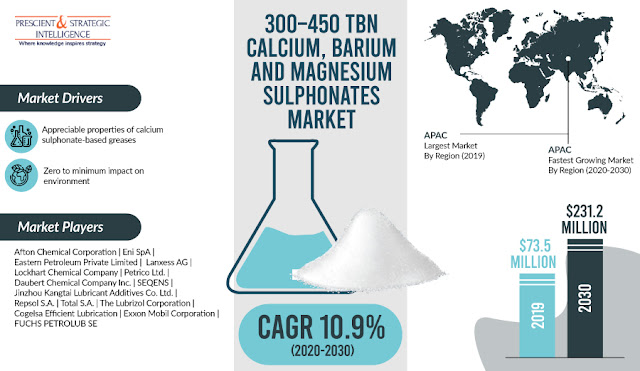
The 300–450 TBN calcium, barium, and magnesium sulphonates market is expected to exhibit a CAGR of 10.9% during the forecast period (2020–2030), due to the increasing preference of lubricant producers for calcium sulphonate over lithium sulphonate. Additionally, the beneficial properties of calcium sulphonate greases will also help the market revenue to surge from $73.5 million in 2019 to $231.2 million in 2030. At present, the key players in the market are focusing on mergers and acquisitions and partnerships to expand their product portfolio and geographical reach.

The market is currently driven by the surging preference of lubricant manufacturers for calcium sulphonate over lithium sulphonate for grease production, owing to the implementation of numerous environmental protection legislations. The increasing use of calcium sulphonate as a thickener in grease-based products, such as automobile and industrial lubricants can be credited to its high mechanical and shear strength and dropping point. Moreover, the exceptional resistance of the salt to oxidation, temperature, wear, and water also makes it ideal for being used as a thickener in lubricants.

Globally, Asia-Pacific (APAC) is expected to hold the largest share in the 300–450 TBN calcium, barium, and magnesium sulphonates market throughout the forecast period. This will be due to the burgeoning demand for passenger cars and commercial vehicles in the region. The turbocharged direct-injection engines being deployed in passenger cars require greases and lubricants with strong additives, such as calcium sulphonate. Moreover, the rapid economic progress of India and China and the booming industrial sector will also augment the demand for calcium, magnesium, and barium sulphonates in the region in the coming years.

Thus, the increasing use of calcium sulphonate in grease production will augment the market growth in the foreseeable future.