Green Chemicals Market Set to Witness Huge Revenue Explosion Between 2019 and 2030

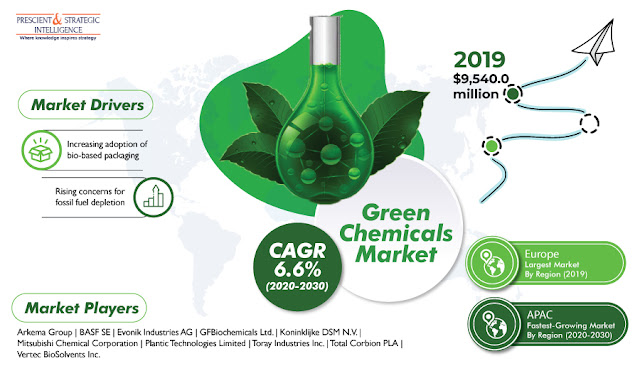
The global green chemicals market attained a valuation of $9,540.0 million in 2019 and it is predicted to generate a revenue of $18,474.2 million by 2030. Furthermore, the market will progress at a CAGR of 6.6% between 2020 and 2030, as per the forecast of the market research company, P&S Intelligence. The major factors driving the advancement of the market are the growing popularity of bio-based packaging and the rapidly depleting reserves of fossil fuels around the world.

Besides the aforementioned factors, the mushrooming demand for ready-to-go food items is also fueling the surging popularity of organically packaged and bio-based packaging foods, especially in countries such as Germany, the U.K. and the U.S., which is, in turn, propelling the expansion of the green chemicals market across the globe. This is because green chemicals are heavily used in these packaging materials. This is subsequently creating lucrative growth opportunities for green chemicals producing companies all over the world.

Depending on application, the market is classified into personal care, food & beverages, automotive, packaging, agriculture, electrical and electronics, textiles, paints and coatings, and construction categories. Out of these, the food & beverages category is predicted to register the highest growth in the market in the forthcoming years. This will be because of the ballooning requirement for food additives made from various natural ingredients such as organic acids like lactic acid, which is heavily used for preserving food items. 

On the other hand, the personal care category is predicted to demonstrate the fastest growth in the market in the upcoming years. This is credited to the rising public awareness about the various beneficial traits of bio-based personal hygiene and beauty products over the conventionally used synthetic chemical-based beauty products. Additionally, the regular usage of conventionally used synthetic beauty products negatively affects the skin, due to the existence of huge amounts of petroleum-based chemicals in these products.

Hence, it can be said with full surety that the market will demonstrate huge expansion across the world in the coming years, mainly because of the growing demand for eco-friendly chemicals and the rising public awareness about the environmental degradation caused due to the usage of synthetic chemicals.

Source: www.psmarketresearch.com

COVID-19 Boosting Production of Medical Adhesives for PPE Production

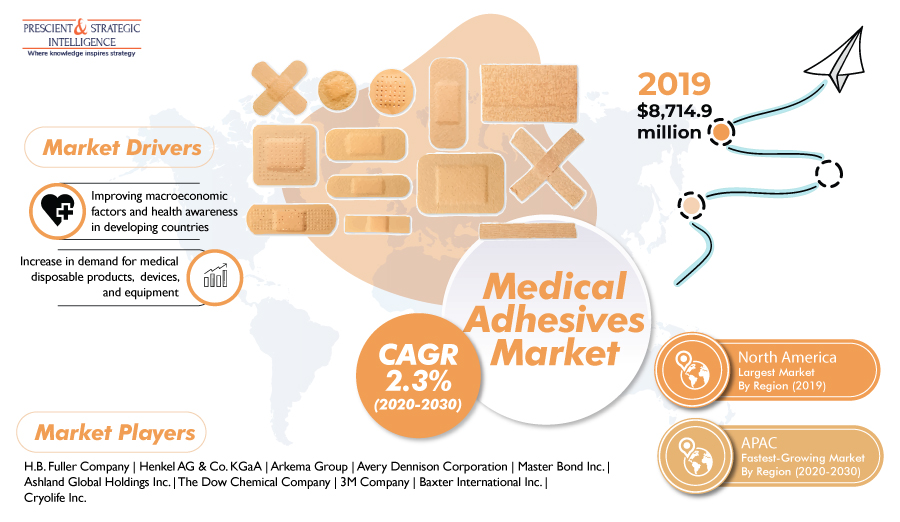
The adoption of medical adhesives is increasing, owing to the surging health awareness and enhancing macroeconomic factors in developing countries, across the world. Over the years, the economic conditions of India, Brazil, and China have significantly improved, on account of the rising gross domestic product (GDP) of these countries. Economic betterment has fueled the demand for medicines, medical devices and equipment, personal protective equipment (PPE) kits, and pharmaceutical products in these nations. Producers of these medical products require adhesives to provide accurate structure and strength to these items. 

Moreover, the outbreak of COVID-19 has amplified the need for medical products like PPE kits, masks, syringes, and blood and saline tubes, which require adhesives in large quantities. The increasing requirement for such products, on account of rising impact of this pandemic will fuel the medical adhesives market at 2.3% CAGR during 2020–2030. The market was valued at $8,714.9 million in 2019 and it is projected to reach $16,367.2 million by 2030. To contain the spread of the virus, hospitals and outpatient facilities are using disposable medical products in abundant quantity.

Thus, the growing requirement for medical products and bio-adhesives have inspired market players like Henkel AG & Co. KGaA, Cryolife Inc., 3M Company, The Dow Chemical Company, Ashland Global Specialty Chemicals Inc., Avery Dennison Corporation, Arkema S.A., Master Bond Inc., Baxter International Inc., and H.B. Fuller to launch a number of new and advanced products. For instance, in November 2019, Bostik, an Arkema Group company introduced a new range of engineering adhesives, namely Born2Bond. These adhesives are developed for vehicles, medical devices, electronics, and luxury packaging.

According to P&S Intelligence, North America is the largest consumer of medical adhesives in the world. This is owing to the high demand, high purchasing power, and technological advancements in the healthcare sector. Besides, the huge healthcare spending in the form of government-administered and funded programs, such as the Medicaid, the veterans’ health administration, the Medicare, and the children’s health insurance program, will boost the adoption of medical products like needles, PPE kits, syringes, and thermometers that use adhesives in large volumes.

Thus, the booming awareness regarding healthcare and the rising cases of COVID-19 will fuel the production of medical adhesives in the near future.

Source: www.psmarketresearch.com

How Is High Volume PVC Demand Propelling Chlorine Production?

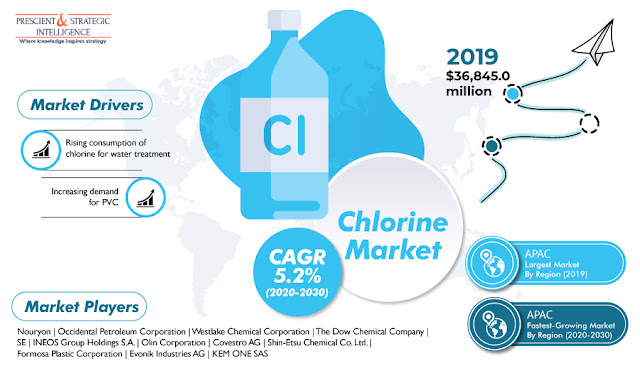
Chlorine is extensively used in the chlorination process required for the manufacturing of polyvinyl chloride (PVC), due to the enhanced thermal stability and higher melt viscosity offered by this gas during the production process. Huge quantities of PVC are used in windshield system components in the automotive industry, non-breakable components in the medical sector, and piping and siding applications in the building and construction industry. Thus, the rising usage of PVC in these application areas will augment the consumption of chlorine in the foreseeable future.

Additionally, the spurring demand for treated water is expected to drive the chlorine market at a CAGR of 5.2% during the forecast period (2020–2030). The market stood at $36,845.0 million in 2019, and it is projected to reach $63,121.6 million by 2030. Developing countries, such as Brazil, Thailand, and India, are increasingly focusing on raising public awareness regarding the harmful effects of consuming contaminated water and its role in amplifying the cases of typhoid, cholera, Hepatitis A, and Hepatitis E. As chlorine can terminate bacteria and other pathogens, it is being increasingly used in water treatment plants.

According to P&S Intelligence, Asia-Pacific (APAC) consumed the highest volume of chlorine in the past and it is expected to continue maintaining this trend in the foreseeable future as well. This can be ascribed to the escalating need for the chemical in China, Thailand, and India for manufacturing EDC/PVC. These countries are recording high volume production of EDC/PVC, due to its spurring requirement in insulation, door sidings, shingles, roofing, and flooring applications. Moreover, the growing public awareness regarding water-borne diseases will propel the usage of chlorine for water treatment in APAC in the coming years.

Moreover, the APAC chlorine market is expected to demonstrate the fastest growth during the forecast period, owing to the high demand for chlorine in the paper and pulp industry. The chemical imparts a white appearance to paper by removing lignin, a wood fiber element that offers a yellow appearance to paper under sunlight. The expansion of the paper and pulp sector in the region will, therefore, facilitate the market growth in APAC in the forecast years. 

Thus, the soaring PVC need and the escalating public awareness regarding water-borne diseases will supplement the production of chlorine in the foreseeable future.

Source: www.psmarketresearch.com
Growing Pharmaceuticals Industry To Boost Magnesium Stearate Market

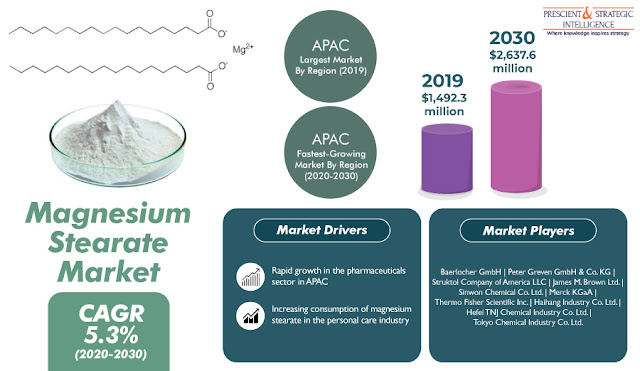
Factors such as the rapidly growing pharmaceuticals industry in Asia-Pacific (APAC) and the rising use of magnesium stearate in the personal care sector are projected to propel the growth of the magnesium stearate market at a CAGR of 5.3% during the forecast period (2020–2030). According to P&S Intelligence, the market generated $1,492.3 million revenue in 2019, which is expected to reach $2,637.6 million by 2030. Moreover, the market is witnessing the surging consumption of this chemical as a food additive in the food and beverages industry. 

One of the prime factors propelling the magnesium stearate market is the rapid growth in the pharmaceuticals industry in APAC. Pharmaceutical drug manufacturers are widely using magnesium stearate as an inactive ingredient, to avoid the sticking of ingredients to manufacturing tools. Additionally, this chemical also serves as a low-cost release agent in the industry. With the rise in the production of pharmaceuticals in the developing countries of the region, such as India, China, and Indonesia, the demand for the compound is increasing.


Moreover, the surging use of this chemical in the personal care sector is another key factor driving the magnesium stearate market. Magnesium stearate can serve as a lubricant and excellent texturizer in the production of cosmetics. Also, the compound is widely applied as a thickening agent in haircare products and creams. Due to the expanding personal care industry, the demand for this chemical is increasing. With the rising consumer spending in emerging economies, the usage of personal care products is increasing, which, in turn, drives the market.

Geographically, the APAC magnesium stearate market accounted for the largest share in 2019, and it is also projected to record the highest CAGR during the forecast period. This is due to the surging consumption of the chemical in end-use industries such as pharmaceuticals, plastics, food and beverages, and personal care. Moreover, chemical manufacturers in regional countries are focusing on facility expansions to meet the high demand from the end-use sectors. Furthermore, the growing incidence of several diseases is raising the need for medicated drugs, which, in turn, is driving the market.

Thus, the rising use of magnesium stearate in the personal care sector and the growing pharmaceuticals industry are expected to propel the demand for the salt during the forecast period.

Source: www.psmarketresearch.com

How Will Vast Population Amplify Agricultural Adjuvants Sale Worldwide?

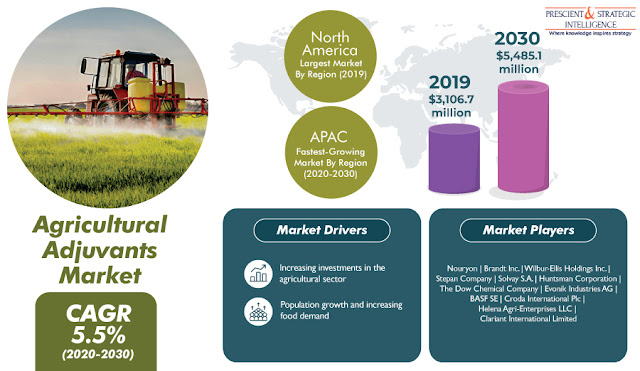
According to the World Population Prospects 2019, by the United Nations, the global population is likely to grow from 7.7 billion in 2019 to 9.7 billion by 2050. The surging population will create additional demand for food crops, cash crops, and horticulture crops in the coming years. The rising need for these crops will amplify the usage of adjuvants in the agricultural sector, as these agrochemicals help in enhancing productivity. This will, therefore, aid the agricultural adjuvants market to grow from $3,106.7 million in 2019 to $5,485.1 million by 2030, registering a CAGR of 5.5% during 2020–2030.

Moreover, the soaring investments and capital flow in the agriculture sector, to develop new products for attaining higher yield and better crop quality, will also drive the agricultural adjuvants demand in the coming years. In recent years, there has been a considerable rise in direct investments in the agricultural industry. Moreover, the escalating focus on farm robotics, farm management, new farming systems, farm agrochemicals, and supply chain technologies will also support market growth in the coming years.

According to P&S Intelligence, North America consumed the highest volume of agricultural adjuvants in the past and it is expected to maintain this trend in the coming years as well. This is ascribed to the presence of local manufacturers, availability of a wide range of products, and government support to adjuvant manufacturing companies and related agrochemical firms. Moreover, customer appreciation policies of these companies are also steering the adoption of agricultural adjuvants in the region.

Whereas, the Asia-Pacific (APAC) agricultural adjuvants market is expected to witness the fastest growth during the forecast period. This will be due to the increasing usage of these agrochemicals in India and China, owing to their vast population base, which requires agricultural products in abundance. For instance, India and China are expected to add around 2.3 billion people to the world population by 2050. Moreover, the surging nutritional requirements in the region will also drive the demand for agricultural adjuvants in the foreseeable future. 

Thus, the booming global population and the soaring agricultural investments will boost the usage of adjuvants in farmlands and agricultural installations in the coming years. 

How Is Agriculture Sector Supplementing India Single-Cylinder Pumpset Market Growth?

The rising pressure on the agriculture sector, on account of the burgeoning population; and increasing government support for the industrial sector are expected to drive the Indian single-cylinder pumpset market at a 5.3% CAGR during the forecast period (2020–2030). According to P&S intelligence, the market was valued at $1,126.8 million in 2019 and it is projected to reach $1,834.3 million by 2030. Currently, the market is dominated by Kirloskar Oil Engines Ltd., owing to its well-established distribution network across the nation.

The rising pressure on the agriculture industry, on account of the surging population, fuels the Indian single-cylinder pumpset market growth during the forecast period. According to the World Population Prospects 2019, the population of India is estimated to rise from 1.36 billion in 2019 to 1.45 billion by 2050. The vast population pool will generate high demand for cash crops, horticulture crops, and food crops, owing to which the usage of pumpsets on arable land is surging at a rapid pace. Additionally, strong government support to the agriculture sector will also support the market growth. 

The increasing government support for the industrial sector is also driving the market growth. The pumpsets are widely used in the oil and gas, power generation, metal and mining, and water and wastewater management industries. In recent years, these industries have witnessed notable growth, due to the surge in investments and strong government support. For instance, government initiatives, such as Ujwal DISCOM Assurance Yojana, Integrated Power Development Scheme, and , Deen Dayal Upadhyay Gram Jyoti Yojana, are fueling the growth of the market for pumpsets in the country.

Geographically, Uttar Pradesh accounted for the largest share in the Indian single-cylinder pumpset market in 2019, due to the rising demand for these systems in the industrial and agriculture sectors. As the economy of this state is mostly dependent on agriculture, it generates the significant demand for single-cylinder pupmsets. Whereas, the market in Punjab & Haryana is expected to showcase the fastest growth in the forecast years, owing to the large-scale agriculture activities, which require groundwater for irrigation purposes. 

Thus, the spurring demand for agricultural produces and the expanding industrial sector will facilitate the market growth throughout the forecast period.

Source: www.psmarketresearch.com

Why will Polyester Hot Melt Adhesive Sales Boom in Asia-Pacific in Future?

With the boom in the packaging industry, the demand for polyester hot melt adhesives is growing rapidly across the world. This is because these adhesives are extensively used in packaging applications, because of their high stability and temperature resistance. Moreover, the expansion of the packaged food and beverage industry, on account of the rising popularity of packaged foods, dairy products, bottled water, and fruit juices is positively impacting the worldwide demand for polyester hot melt adhesives.

These adhesives are also heavily used in the packaging of medial tapes, wound dressing materials, and band-aids. Apart from the surging packaging industry, the soaring requirement for lightweight automotive materials is also driving the demand for polyester hot melt adhesives across the world. Conventionally, the automobile industry relied heavily on mechanical fasteners such as welds, bolts, and nuts for bonding automotive components and parts. However, these days, the popularity of these materials is falling rapidly.

Globally, the polyester hot melt adhesives market will demonstrate the highest growth rate in the Asia-Pacific (APAC) region in the coming years, as per the forecast of P&S Intelligence, a market research company based in India. This will be because of the surging investments being made in the industry in the developing countries such as India, China, Thailand, and Vietnam. Moreover, China is a manufacturing center and one of the largest exporters of electrical and electronic components in the world.

Therefore, the demand for polyester hot melt adhesives will rise enormously in the upcoming years, mainly because of their surging usage in packaging applications, growth of the packaging industry, and mushrooming requirement for lightweight automobiles around the world.

Source: www.psmarketresearch.com