Market Overview:

  • The intubation tubes market was valued at USD 2,727.6 million in 2023 and is projected to reach USD 4,294.4 million by 2030, growing at a CAGR of over 6.9%.

  • Rising road accidents and trauma are major drivers of industry growth. There has been a notable increase in fatalities due to road accidents in recent years.

  • According to the WHO, road accidents claim around 1.5 million lives annually.

  • These accidents not only cause emotional trauma for the victims’ families but also result in significant economic losses.

  • Major accidents often lead to severe trauma in patients, requiring surgical intervention or immediate treatment, thus increasing the demand for intubation tubes.

  • The SARS-CoV-2 outbreak led to a significant rise in industry revenue, as the pandemic created a surge in patients needing intubation due to respiratory difficulties.

  • Intubation tubes are widely used to provide breathing support to COVID-19 patients.

Key Insights:

  • In 2023, the regular category held the largest market share at 40%, driven by the growing volume of surgeries due to increased respiratory disease incidence.

  • The reinforced category is expected to grow at a high CAGR, fueled by the rising number of patients with neurological conditions requiring surgery, as well as increased facial surgeries and road accidents.

  • The orotracheal category dominated the market in 2023, accounting for approximately 75% of the share. This route is preferred for its patient comfort.

  • Orotracheal intubation is extensively used for treating apneic and critically ill patients with multisystem diseases and severe injuries.

  • Emergency treatments represented the largest market share in 2023, around 55%, due to rising incidences of emergencies such as cardiopulmonary arrest, accidents, respiratory distress, and airway obstruction.

  • The therapy segment is expected to grow significantly, driven by the increasing number of surgeries that require intubation tubes for airway management.

  • North America was the leading market in 2023, holding about 60% of the share. This dominance is attributed to strong healthcare infrastructure, established reimbursement policies, and growing adoption of advanced medical devices.

  • The Asia-Pacific (APAC) region is anticipated to experience the fastest CAGR over the next decade due to rising pollution levels, an aging population, and a high incidence of cardiopulmonary conditions, all contributing to a higher demand for surgeries.

  • The intubation tubes market is highly fragmented and competitive, with companies actively engaging in new product launches, acquisitions, collaborations, and technological advancements to enhance their market presence.

Revolutionizing Business Operations with Connected Enterprises

Every company recognizes that consumer satisfaction, as well as loyalty, are the utmost essential parts of their brand. At the same time, customers are innately conscious of the fact that technology has carried them nearer to their preferred brands. 

This forms a positive loop of feedback in which brands encourage consumers, and consumers' feedback and opinions form the paths in which companies think, act, as well as react. 

Since consumer opinions are important, it’s essential to remember that providing the finest experience is a continuous, ever-evolving aim. Customers today look forward to customized as well as meaningful interactions and engagements. To form these relationships, companies need to put efforts to expand well beyond their consumer's first transaction or purchase. In this, connected enterprise enters the equation.


Browse detailed report analysis on Connected Enterprise Market Size and Share Report, 2024-2030

Understanding Connected Enterprise

A connected enterprise includes all operational features that are digitalized like sales, customer support, finance, human resources, R&D, engineering, logistics, marketing, and production. This digitalization assists companies in connecting people, equipment, and processes, in a safe and well-organized way. 

Business implementing this method can improve their approaches as well as daily operations through IoT, advanced procedures, and data analytics. An appropriately built network can lead to greater efficiency and lesser operational expenses.

Application of Connected Enterprise

The application of connected enterprise comprises real-time collaboration, asset performance management, enterprise infrastructure management, security, streaming analytics, data management, network management, remote monitoring, customer experience management, and mobile workforce management.

Among these, connected enterprise is mostly used for remote monitoring. This is because of the growing popularity of real-time asset monitoring from any place. This way businesses can monitor their network operations, and retailers can easily come up with creative concepts to manage inventory and improve consumers' in-store shopping experiences.

Major Advantages of Connecting Workforce to Enterprise 

By using AI and various other smart technologies, businesses are offering workforces with real-time supervision and support, allowing them to execute their jobs more efficiently. Frontline workforces can access data, work together with colleagues, and get real-time alarms on possible dangers, all of which assist in enhancing their safety and efficiency.

The advantages provided by AI as well as connected technologies are momentous:

• Enhance decision-making: By offering real-time information as well as data analytics, connected technologies can assist businesses in making proper decisions regarding their procedures and classify new opportunities for developments.

• Upgraded efficiency: By automating repetitive tasks as well as offering real-time insights, AI and connected worker technologies can assist in streamlining operations and decrease faults.

• Greater quality control: By providing real-time data on production processes and product quality, AI and connected worker technologies can help identify issues early and prevent defects.

• Boosted productivity: AI with connected technologies can assist workforces in executing their duty more efficiently.

Considering all this

With the increasing adoption of digital platforms by companies, the arrival of digital technologies, and the widespread utilization of smartphones, the requirement for connected enterprises will continue to increase. As a result, their demand will reach a value of USD 2,981.9 billion by the end of this decade. 

Network and Cloud Security Drive Growth in Managed Detection and Response

The managed detection and response (MDR) market is projected to reach USD 14,797.6 million by 2030, growing at a rate of 23.4% from USD 4200.6 million in 2024. This growth is driven by the widespread adoption of IoT and other advanced technologies. The increasing need for real-time data monitoring and the rise in cyberattacks are key factors fueling industry expansion.

Network security dominates the market share due to rising cybercrime, heightened demand for sensitive data protection, and the proliferation of mobile devices. In 2022 alone, more than 4,000 data breaches were reported, highlighting the severe consequences such as reputation damage, asset infringement, and identity theft.

Effective network security is critical for safeguarding valuable information, especially amidst evolving hacking techniques and the growing adoption of 5G technology, which further underscores its importance.


Cloud security is also experiencing significant growth as SMEs and large enterprises expand their cloud-based operations and embrace hybrid cloud environments. Cloud deployment accounted for 65% of the managed detection and response market in 2023, offering easy access to solutions via the internet. This deployment method is favored by IT-centric organizations for its cost efficiencies, protection against threats like hyperjacking and DDoS attacks, ease of scalability, and enhanced collaboration across departments.

Small and medium-sized enterprises are expected to grow rapidly, driven by increased cyber threats and the adoption of advanced technologies over traditional ones. Managed detection and response solutions play a crucial role in securing SMEs' assets against modern and persistent threats, leading many companies to offer tailored cybersecurity solutions for smaller firms.

For instance, in March 2023, NTT launched a scalable, cloud-native managed detection and response service, enhancing cyber resilience amidst global IoT proliferation and heightened focus on real-time data monitoring. This trend is expected to continue shaping the market in the coming years.

The Evolution of Logistic Automation: Trends and Future Prospects

The logistic automation market reached a value of USD 33.0 billion in 2023 and is projected to grow to USD 61.0 billion by 2030, with a compound annual growth rate (CAGR) of 9.2%.


Automation technology has significantly improved efficiency and management across various industries, offering numerous advantages in purchasing goods. It plays a crucial role in inventory management and the production process.

Logistics automation integrates control systems, software, and equipment to enhance operational efficiency. This includes automated storage and transportation systems such as autonomous mobile robots, automated retrieval systems, and robotic arms.

These systems offer benefits such as speed, flexibility, improved managerial control, enhanced customer service, and advanced data analysis. They are particularly transformative in transportation management.

Businesses can expand their transportation networks and reduce fuel costs through advanced route optimization and continuous monitoring systems.

In 2023, hardware constituted the largest segment of the industry, accounting for approximately 50% of the market. Hardware components are essential for executing various logistical tasks, driven by increasing demand across sectors for automation technologies.

Transportation logistics represented the largest market share within logistics automation. Given the industry's core function of moving goods, automation technology is pivotal in enhancing transportation efficiency.

Sales operations led the industry with a 45% share in 2023 and are expected to grow at a CAGR exceeding 9.3% in the coming years. Effective sales performance is critical for profitability across all sectors.

Large enterprises dominated the market share, leveraging their financial resources to invest significantly in innovative automation technologies, thus maintaining a competitive edge.

North America emerged as the largest regional contributor, a position expected to persist due to ongoing technological advancements and robust infrastructure supporting automation technologies like warehouse management systems, AI, and robotic automation.

The logistic automation industry is poised for continued growth, driven by increasing e-commerce utilization and ongoing technological advancements.

European E-Signature Market to Reach $12B by 2030

In 2023, the European e-signature market generated USD 1,471.2 million in revenue. It is anticipated to witness a significant compound annual growth rate (CAGR) of 35.4% between 2024 and 2030, reaching USD 12,177.1 million by 2030. This growth can be attributed to the rising prevalence of remote working models, favorable government regulations, an increase in online documentation processes, and the cost-effectiveness of e-signatures.


Small and medium-sized enterprises (SMEs) are increasingly adopting e-signatures as they eliminate paperwork and reduce document delays, particularly in sales and HR departments. Additionally, administrative tasks are reduced by around 30%, and costs for materials and shipping are eliminated.

The adoption of these technologies also creates valuable trading opportunities globally, as they significantly cut travel and HR expenses associated with authenticated documents.

The penetration of e-signatures among European SMEs has surged, especially during the COVID-19 pandemic, enabling continued workflow from remote locations. Paris-based SME Yousign is targeting up to 50,000 small and medium-sized firms across the continent by the end of 2024.

A critical factor driving this market is the rapid digital transformation in the region, leading to the digitization of documentation processes in organizations and institutions.

Key Insights

  • During the forecast period, the service category is expected to grow at the highest CAGR of 35.8%. This growth is due to benefits such as significantly reduced processing times from days to hours, lower costs, and increased work efficiency. For instance, in Spain, physical transactions cost around USD 84, whereas electronic ones range from USD 6 to USD 9.
  • In 2023, the banking, financial services, and insurance (BFSI) sector held the largest market share of approximately 40%, with an estimated CAGR of 36%. This growth is driven by the demand for customer-centric applications and the BFSI sector's focus on digital preferences. Digital signatures in BFSI ensure identity safety, robust security, and regulatory compliance management, streamline complex procedures, and expedite client onboarding.
  • The cloud category is projected to advance at a higher CAGR of 35.8% during the forecast period. Data security is a major concern for cloud-based e-signature software. Storing the signature key on a remote server reduces the risk of data loss to cybercriminals, increasing the demand for cloud-based e-signature software in Europe.
  • In 2023, the Public Key Infrastructure (PKI) category held the largest market share of approximately 35%. PKI is preferred for its standard technology, allowing trust provider selection without needing an online third-party verification server.
  • Clickwrap electronic signatures are expected to have the highest CAGR of 35.7% over the forecast period. Clickwrap signatures offer centralized contract storage for back-end records, driving demand.
  • In 2023, the U.K. held the largest market share of 34.9%, due to increased e-signature usage for digital identification. GOV.UK Verify confirms a person's identity using government documents like passports or driving licenses, providing a safe and quick entry process.
  • Germany, the second largest market in Europe, has been using e-signatures since 2001 under its e-signature law.

The low-code development platform market, valued at USD 24.8 billion in 2023, is projected to reach USD 167.0 billion by 2030, growing at a compound annual growth rate of 31.4%.

The increasing demand for business digitization is a key driver of this industry's growth. As part of the digital revolution, companies in manufacturing, BFSI, oil & gas, automotive, and other sectors are rapidly adopting digital technologies to maintain their competitive edge.

Low-code development platforms are crucial in business digital transformation, reducing the resources and time required for traditional software development processes. Amidst current economic conditions and rising industry competition, businesses strive to enhance efficiency with limited resources, necessitating effective time-to-market (TTM) strategies to engage consumers with innovative features and applications.

Digital transformation has enhanced operations in sectors like healthcare, BFSI, retail, and education. Businesses use digital applications to retain customers, ensure high satisfaction, and maintain organized data.

Low-code development platforms enable faster application development, simplify mobile and web application creation, and offer drag-and-drop templates that enhance application scalability. This allows businesses to quickly develop new applications to remain competitive.

Market Insights: In 2023, North America was the largest contributor to the industry, with a 45% share, due to rapid digital technology adoption and the presence of major players in the region. The Asia-Pacific (APAC) region is expected to grow at the fastest rate of 31.8% in the coming years, driven by increasing internet usage and the need for businesses to reduce operating costs.

The solution category dominated the industry in 2023 with over 70% share, due to widespread adoption across various sectors to cut long-term operational costs. The services category is predicted to grow at a higher rate of 31.6%, driven by the rising need for integration and implementation services.

The cloud category leads the industry and is expected to grow at a rate of 31.5%, with most low-code platforms being cloud-deployed for real-time service and app monitoring. Large enterprises, with about 65% share in 2023, have higher budgets for employing low-code platforms to quickly develop numerous applications. The SME category is anticipated to grow at a faster compound annual growth rate of 31.7%, as SMEs prefer cloud-based low-code platforms to reduce development costs and resource barriers.

The IT sector was the largest contributor to the industry in 2023, with around 30% share, due to the rapid adoption of new technologies. The low-code development platform market is highly fragmented, with several major companies. Advancements in digital technologies such as predictive analysis, machine learning, and artificial intelligence, along with sector-wide digital transformation, have intensified market competition.

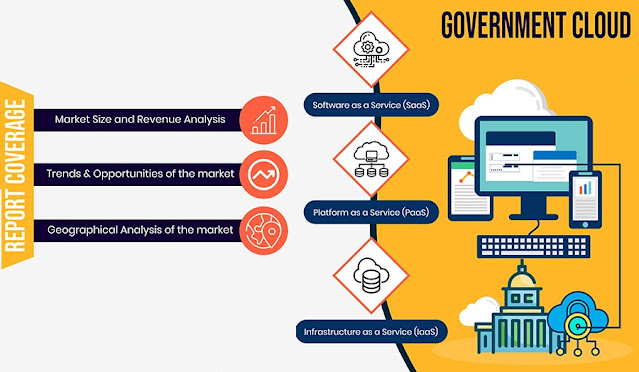
Government Cloud Industry Trends, Leading Players and Forecast Report, 2030

The government cloud industry was valued at USD 40.2 billion in 2023 and is projected to reach USD 102.2 billion by 2030, with a growth rate of 14.5% from 2024 to 2030. This development of the market can be credited to the increasing requirement for compliant and protected data storage and managing solutions throughout government agencies.

In agreement with this, as cyber threats continuously grow, governments spot the requirement for government clouds fortified with robust cybersecurity measures, making a positive position for market development.

Unlike before, nowadays the immense growth of the government cloud market is reliant on a lot of influencers using diverse factors like developing a network for remote access to citizen data which includes user logs, policies, and remote systems among others.

In addition, the adoption of cloud IaaS and PaaS, AI, and IoT for smoother backup, unstructured data processing, and business resumption is leading to growth. On top of this, the growing acceptance of Identity and Access Management (IAM) among multiple sectors is also one of the reasons driving the ever-increasing growth within this industry.

All kinds of digital data are growing quickly at an unparalleled rate throughout the globe. This is starting to become an issue for governments throughout the globe as they find themselves required to handle such data efficiently with ingenuity and offer opportunities for the overall welfare of their people. According to the International Data Corporation, the Worldwide Datasphere will get 180 zettabytes in 2025.

Based on deployment type, the private cloud category is projected to advance quickly in the coming few years. Private clouds are perfect for storing or processing delicate data because the applications and also data stay behind the firewall and are only available to the business. ability to migrate non-sensitive data to a public cloud to control the surge in need on the private cloud.

The SaaS model (Software as a Service) occupied the pole position among the key players in the field which consequently was fueled by the common desire to conveniently access high-end software tools with the addition of major cutbacks in the hardware costs. One of the upshots is that public bodies in various nations are striving more to have SaaS products deployed to manage software updates and deployment efficiently.

North America stood out as being the greatest driving force in the development of the industry because it was always concerned about data security, the mastery of adopting new technologies, and the demand for the government to be efficient and responsive.

Moreover, governments in North America which include Canada and the USA are emphasizing the security of the data in the cloud which in turn makes more developers consider developing secure government clouds that comply with stern regulations like FISMA and FedRAMP.