Government Cloud Industry Trends, Leading Players and Forecast Report, 2030

The government cloud industry was valued at USD 40.2 billion in 2023 and is projected to reach USD 102.2 billion by 2030, with a growth rate of 14.5% from 2024 to 2030. This development of the market can be credited to the increasing requirement for compliant and protected data storage and managing solutions throughout government agencies.

In agreement with this, as cyber threats continuously grow, governments spot the requirement for government clouds fortified with robust cybersecurity measures, making a positive position for market development.

Unlike before, nowadays the immense growth of the government cloud market is reliant on a lot of influencers using diverse factors like developing a network for remote access to citizen data which includes user logs, policies, and remote systems among others.

In addition, the adoption of cloud IaaS and PaaS, AI, and IoT for smoother backup, unstructured data processing, and business resumption is leading to growth. On top of this, the growing acceptance of Identity and Access Management (IAM) among multiple sectors is also one of the reasons driving the ever-increasing growth within this industry.

All kinds of digital data are growing quickly at an unparalleled rate throughout the globe. This is starting to become an issue for governments throughout the globe as they find themselves required to handle such data efficiently with ingenuity and offer opportunities for the overall welfare of their people. According to the International Data Corporation, the Worldwide Datasphere will get 180 zettabytes in 2025.

Based on deployment type, the private cloud category is projected to advance quickly in the coming few years. Private clouds are perfect for storing or processing delicate data because the applications and also data stay behind the firewall and are only available to the business. ability to migrate non-sensitive data to a public cloud to control the surge in need on the private cloud.

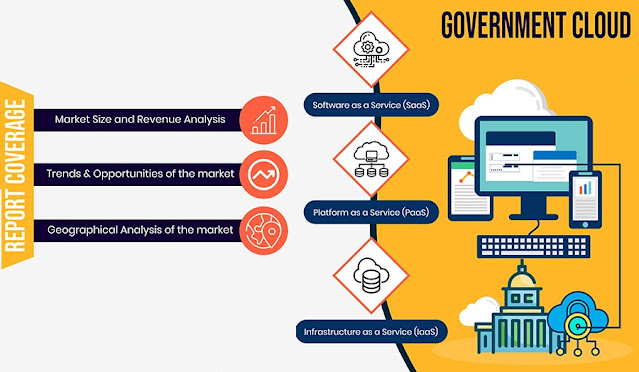
The SaaS model (Software as a Service) occupied the pole position among the key players in the field which consequently was fueled by the common desire to conveniently access high-end software tools with the addition of major cutbacks in the hardware costs. One of the upshots is that public bodies in various nations are striving more to have SaaS products deployed to manage software updates and deployment efficiently.

North America stood out as being the greatest driving force in the development of the industry because it was always concerned about data security, the mastery of adopting new technologies, and the demand for the government to be efficient and responsive.

Moreover, governments in North America which include Canada and the USA are emphasizing the security of the data in the cloud which in turn makes more developers consider developing secure government clouds that comply with stern regulations like FISMA and FedRAMP.

In 2023, the mobile virtual network operator market had a value of USD 79.2 billion, and it is projected to expand at a compound annual growth rate (CAGR) of 8.8% from 2024 to 2030, reaching USD 141.9 billion by 2030.

This development of the market can be credited to the rise in the penetration of mobile devices and the need for low-priced mobile facilities; quick development in the requirement for triple-play facilities in emerging nations; and a surge in the need for high-speed internet connectivity.

However, while the traditional, full MVNOs have always been market leaders in terms of revenue, there have been newer players entering the market with the foremost focus on value-added services.

Regional Outlook

• The Prepaid category is estimated to advance faster at a CAGR of more than 9.3% over the projection period because of its customization choices and pay-as-you-use model.

• In 2023, the postpaid category generated the larger revenue share and is projected to continue to lead the industry. This is mainly because they provide customers the ease of paying monthly bills based on service usage, along with advantages such as unlimited services and rollover of unused data.

• Discount MVNOs took the largest portion of the market in 2023, and it is predicted that they will maintain their dominance given the campaigns of digitalization, the growth of the target group, their capability to engage customers, the need of small and middle enterprises, and the high competitiveness of the telecom providers.

• Cellular M2M MVNOs will make the biggest mark due to intensified use of cellular connectivity across different gadgets, a new level of 3G M2M technology, larger mobile network coverage, and MVNOs expanding their service offerings.

• In 2023, full MVNOs had more than 55% of the revenue share and the category is also projected to uphold dominance.

• The full MVNO model is common because of offers SIM cards, provides value-added services, and guarantees complete customer ownership and relationship.

• In 2023, the consumer category had a higher revenue share, and the category is also projected to uphold its position.

• Constant extension of the mobile subscription list and growing numbers of mobile devices are primary reasons for mobile data connection growth.

• Data-intensive applications like web browsing and video streaming are gaining more and more popularity among consumers, which represents market growth.

• Funds are being set aside to boost the beneficial sources by connecting more mobile broadband and, as a result, to have a positive role in category growth.

• The European industry held the largest revenue share in recent years and is projected to uphold supremacy.

• High acceptance of enhanced technologies, infrastructure growth, and the existence of several MVNOs contribute.

• Acceptance of combined services like VoIP also propels industry development.

• The APAC region to experience the fastest development because of partnerships between market players and mobile phone makers.

AutoML Industry Trends and Forecast Report, 2030

According to the latest market research study published by P&S Intelligence, the AutoML industry is witnessing growth and is projected to reach 15,499.3 million by 2030.

Automated Machine Learning Market Report


The market is driven by the growing need for effective scam recognition solutions, the rising requirement for tailored product recommendations, and the increasing importance of predictive lead scoring.

Cloud computing is broadly accepted to create greater competitiveness through superior cost efficiency, agility, scalability, and resource use optimization. Unlike any other technology that can be summed up or viewed in its totality, cloud computing comprises many parts that when put together, serve a greater cause.

It provides access to cloud-native tech, advances the style of operation, and creates conditions for ML and AI development and addition. It is demonstrated as the main direction in the market growth that the demand for cloud-based platforms is increasing.

Cloud-based solutions consist of a SaaS model, which gives users the possibility to remotely access automatically generated machine learning solutions via an internet service. The fact that the solution is cloud-deployed ensures a better level of flexibility and scalability alongside an affordable price and reduces the IT infrastructure costs.

Finding and forestalling frauds are one of the most challenging activities in the industrial world for every company in every sector. This results in more numerous instances of fraud detection schemes that are leading to an increased market of AutoML. Similarly, Federal Agencies are estimated to have improperly paid up to 247 billion dollars in just the fiscal year of 2022, and since the fiscal year 2003, improper payments are estimated to be around USD 2.4 trillion.

Regional Outlook

• In 2023, the large enterprises category dominated in revenue generation, propelled by AutoML acceptance for cost decreases and strategic purposes.

• SMEs are estimated to advance quickly at a 51.6% CAGR, mainly because of AutoML's role in advancing customer prospecting effectiveness.

• The sales & marketing management category is projected for fast development because of wide usage for client insights and emotional analysis.

• The application comprises content personalization, lead generation, client segmentation, and advanced customer engagement.

• The BFSI category dominates AutoML acceptance for scam detection, credit hazard analysis, and modified services, propelling significant revenue.

• The future of the healthcare industry with AutoML is certainly promising; using it will improve disease diagnosis, research, and patient care.

• The sales & marketing management category is poised for quick development, using AutoML for client insights, content personalization, and engagement strategies.

• Multinational businesses tend to turn to AutoML to cut costs, analyze competitors, and guide sales and marketing decisions, while small and medium enterprises tend to implement AutoML faster with a focus on identifying customers.

• In 2023, the North American region dominated AutoML revenue because of enhanced IT infrastructure and major industry existence, such as BFSI, IT & telecom, and healthcare.

• Substantial venture capital (VC) backing in AI techs since 2013 has boosted industry development, with U.S. AI-associated VC investments touching USD 99.5 billion in 2018.

• California led the way with USD 510 billion AI investments and then Massachusetts took the second place with USD 247 billion followed by New York with USD 110 billion.

• IT spending, technical progress, and government measures are the factors which benefit AI environment and industry development in North America, therefore, they make North America strong AI environment and industry giants.

Machine Vision - Global Industry Share and Future Analysis

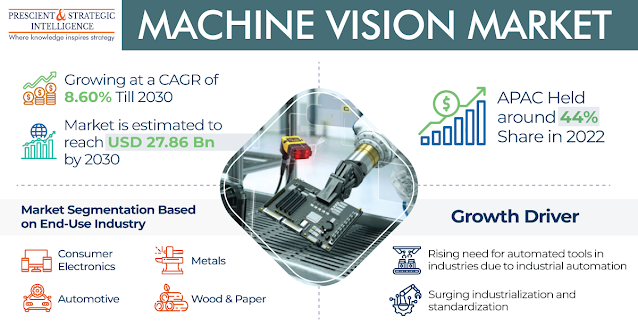
The global machine vision market is experiencing growth and is projected to reach USD 27.86 billion by 2030. 


The growth can be attributed to the increasing demand for quality inspection and automation across various industries, along with significant research and development investments by major players and advancements in technology.

In recent years, PC-based machine vision systems have dominated the market, holding a majority share of 56%, and are expected to maintain their leading position until 2030. These systems easily connect with cameras or image acquisition boards and feature customizable software, making them more user-friendly and versatile for a variety of camera applications. One such application is general inspection, such as checking for the presence of parts, like examining studs on a car's underbody at an auto body shop.

Mechanical systems guided by vision incorporate industrial automatons and machine vision devices, rapidly advancing due to their remarkable versatility, integration, and straightforward bin-picking capabilities. While fixed robotic measures were previously common, industrial robots equipped with this technology now efficiently direct goods to specific locations for additional operations like welding, placing, and picking.

The robotic cell category is expected to experience faster growth, progressing at a compound annual growth rate (CAGR) of 9.1% during the forecast period, primarily driven by the adoption of robots for sorting, picking, and other production-line tasks. This is attributed to advancements in deep learning, machine vision, and AI technologies, as well as the increasing availability of line scanning equipment.

In recent years, the food and packaging category had a significant machine vision market share and is also estimated to be in the same position during the forecast period. This is primarily because such systems are used for quality assurance, measurement, guidance, and positioning and identification propels the market.

Moreover, the rising global demand for packaged food and the increasing popularity of online shopping in developing nations are driving the need for retail e-commerce packaging, thereby necessitating such technology for packing tasks.

During the projection period, the APAC market will witness the fastest growth, developing at a CAGR of 9.7%. This can be ascribed to fast industrialization, the increasing automotive and industrial metro, and the rising acceptance of AI, robots, and ML by manufacturing establishments in nations such as India, China, and Japan.

China produces the mainstream of revenue in the regional industry. This is because of the wide manufacturing hub of electric goods where their tech is extensively utilized, the increasing automotive industry, and the high expenditure by international companies in research and development in the country.

Thus, the rising requirement for excellent examination and mechanization in diverse manufacturing verticals; and the growing R&D investment by major players, are key reasons propelling the machine vision market.

Fortify Your Companies Security with Wireless Testing

The wireless testing market is experiencing growth and is projected to reach USD 31.23 billion by 2030. This growth can be credited to the development of 5G networks throughout the world, the increase in demand from the consumer electronics market, and quick technological enhancements in wireless testing technologies.


What is Wireless Testing?

Wireless testing appraises electrical items that are proposed to function without wires – anything from computers and electric machines to industrial working with wireless components.

The Benefits of Wireless Testing

There are numerous advantages of conducting a wireless diffusion test. Classifying weaknesses that threat actors are able to exploit is dominant. Testing the efficiency of your safety posture or exposing inadvertent weaknesses permits an organization to remediate these problems before they happen for real. The increasing usage of the internet and growing acceptance of digital facilities have led to an extensive hike in the size of vital information being produced.

Types of Wireless Testing

There are numerous kinds of wireless testing, each catering to a unique drive:

Functional Testing: This finds if a device that is wireless or network performs its proposed purposes properly. For example, does your smartphone connect to Bluetooth? Can you make calls without nosiness?

Performance Testing: This checks the capacity, speed, and overall performance of wireless networks. It guarantees that your internet linking is rapid enough for streaming or gaming online.

Security Testing: Safety is a top worry in wireless tech. This kind of testing recognizes weaknesses and guarantees that your information stays safe from cyber-attacks.

Interoperability Testing: It checks that diverse wireless devices can function together flawlessly. For instance, can your smartphone connect to numerous Wi-Fi routers without problems?

The Wireless Testing Process

Wireless testing includes a set of steps:

Test Planning: Defining the purposes and possibilities of the testing procedure.

Test Design: Making test cases and situations to assess different features of wireless devices and networks.

Test Execution: Executing the tests and gathering information on performance, functionality, and safety.

Analysis and Reporting: Estimating the results and making reports to classify problems and areas for enhancement.

Re-testing: Fixing recognized problems and re-executing tests to guarantee they are fixed.

Furthermore, the increasing usage of the internet and growing acceptance of digital facilities have led to an extensive hike in the size of vital information being produced. Also, with this, there is a requirement for improving the set-up solutions, which is boosting the wireless testing market growth.

The Future of Wireless Testing

As technology continues to improve, the requirement for wireless testing will only advance. With the arrival of 5G, IoT devices, and smart metropolises, the requirement for dependable and safe wireless communication will be supreme. Meaning that the role of testing in wireless will become even more essential in guaranteeing the unified process of our interconnected realm.

Thus, the growth of 5G networks throughout the world, the increase in demand from the consumer electronics market, and quick technological enhancements in wireless testing technologies are the major factors driving the wireless testing industry. 

Smart Homes 2030: A $196.5 Billion Industry Revolution

The smart homes market will power at a rate of 10.2% by the end of this decade, to reach USD 196.5 billion by 2030. This will be because of the growing disposable income in emerging economies, increasing significance of remote home monitoring, increasing count of internet users, and rising acceptance of smart devices.


The entertainment category dominated the industry, and the situation will remain like this in the years to come. This would be because of the extensive diversity of solutions offered by tech providers for operating along with controlling the entertainment systems inside a house. 

For example, Alexa is able to control lights, televisions, and alarms, deliver sports scores, news and update users with other instantaneous info.

With the use of smart, energy-, and cost-effective devices, customers can lower the consumption of energy of their homes through automatic function settings and processes.

The industry growth is also encouraged by the considerable increase in the requirement for smart home healthcare solutions, growth in the acceptance of emerging technologies, for example IoT, in homes; and surge in the necessity for less-carbon-emitting solutions globally.

Furthermore, internet connectivity is combined with a number of medical devices for helping in monitoring the patient’s health and deliver an improved quality of nursing at their residences, thus reducing the requirement for the expensive healthcare services presented at hospitals, particularly for aging people.

North America will dominate the smart homes market by the end of this decade, as stated by P&S Intelligence.

The key factors powering the regional market are the expanding requirement for dependable and cost-effective home management systems, as well as cutting-edge safety and security systems; enhancing device standards, and increasing requirement for integrated smart devices, for example tablets, voice assistants, and IoT-supported devices.

The count of houses with this kind of appliances and systems in the region is greater than in supplementary regions, which is the important reason the region produces the highest revenue for product and software providers.

Worldwide, a number of countries are implementing green building policies, thus generating huge prospects for intelligent residential appliance and related software providers. In the years to come, the buildings constructed under green initiatives would be fortified with cutting-edge ecological techniques, with the main focus on the conservation of energy.

The robust initiatives taken by governments in a number of regions to inspire the expansion of green buildings and the progressions in data communication technologies and connected devices would, therefore, support the growth of the market growth.

Due to the increasing use of internet penetration around the world, the demand for smart homes will continue to grow by the end of this decade.

Artificial Intelligence in Education - Industry Development and Future Analysis

The AI in education market was sized about USD 2,126 million in 2022, and it will power at a rate of 36.6% in the years to come, to reach USD 25,772 million by 2030.

The solution category held a larger share, of 77.4%, in the recent past and it will continue like this in the years to come. 

This has a lot to do with the increasing requirement for AI academic solutions for enabling educators to mechanize administrative tasks and discover more potentials for improving the efficiency of classroom teaching.

Cloud had a larger share in the past, and it will continue like this in the years to come as well. This is because of the increasing use of cloud platforms for supporting IT modernization and growing focus on reducing the total ownership cost.

Moreover, cloud enables students to improve their knowledge and aids accomplish business processes, resulting in improved pupil engagement and enhanced performance.

Furthermore, AI-empowered teaching solutions installed on a cloud network bid numerous advantages, including developing responses to lessen risk, automated updating of software, around the clock support, reducing cost of IT operations, and disregarding with the requirement for updating internal systems.

As per P&S Intelligence, learning platforms dominated the AI in education market in the past, and it will be like this in the future as well.

This is chiefly ascribed to the increasing preference for distance and online teaching courses, the budding trend of self-learning through online platforms, the evolvement of soft skills of learners, growing emphasis  on the integration of next-gen techs in the education industry, and providing improved teaching platforms. 

Thus, market players are concentrating on the introduction of platforms offering customized teaching services.

North America dominated the industry with a total revenue of USD 887 million, and it will be like this in the future.

This is due to the fact that the it has a sophisticated educational infra, a high emphasis on plummeting the burden on teachers with regards to administrative tasks, enormous spending on EdTech, an increased requirement for personalized learning in classrooms, and a growth in requirement for intelligent solutions for improving students’ performance in the academics. 

Also, more than a few key players are emphasized on academic content in audio, video, and charts, enabled by AI to improve the knowledge of the students.

With the growing emphasis on e-learning and digitization, conversational learning is becoming a vital aspect of education. It is an idea in which content is accessible as a two-way conversation. Teaching like this, makes the procedure more interactive, interesting and easily understandable for students.

It is because of the growing demand for professional services globally, the demand for AI in education will continue to grow in the years to come.