Booming Sales of Packaged Consumer Goods Driving Demand for Digital Inks

Digital inks are extensively used in the packaging industry in various regions such as Asia-Pacific (APAC), South America, the Middle East and Africa (MEA), and North America. Thus, the burgeoning requirement for packaged consumer goods, on account of the surging disposable income of people, mushrooming population of young people, and the soaring gross domestic product (GDP) of several countries, is driving the worldwide demand for digital inks. For instance, in India, the packaged food industry is predicted to double in value and generate a revenue of $70 billion by 2025. 

Moreover, the ballooning usage of digital inks in tags and labels, flexible materials, and metal cans is further boosting their demand. Besides the aforementioned factors, the growing demand for ultraviolet (UV)-cured inks is also positively impacting the sales of digital inks across the world. UV-cured inks offer several benefits such as high curing speed, enhanced durability, and optimum print quality. These inks with flexible ink films provide improved resistance to scratches and wear and tear and produce minimum volatile organic compound (VOC) emissions.

This was because commercial printing needs prints having high resolution. Geographically, the sales of digital inks were the highest in North America between 2013 and 2016, and this trend is expected to continue in the coming years as well. This is credited to the booming electronics industry and the soaring requirement for digital inks in the office printing and commercial printing industries in the region. Apart from these, the mushrooming sales of eco-friendly digital inks in the region are also driving the expansion of the North American digital inks market.

Hence, it is safe to say that the demand for digital inks will boom in the forthcoming years, mainly because of the soaring sales of packaged consumer goods, especially in APAC, North America, MEA, and South America, on account of the increasing disposable income of people and the rapid economic growth of the regional countries, and the surging usage of UV-cured inks in various sectors across the world.

Source: www.psmarketresearch.com

Why Are Countries Preferring Geothermal Power over Other Renewable Energy Sources?

Geothermal energy is generated from the heat energy stored under the crust of the Earth, using the steam produced from the hot reservoirs present beneath the surface. These power plants operate a high temperatures, within a range of 300 °F–700 °F, utilizing the hydrothermal resources that come from either hot water wells or dry steam wells. The steam produced by the hydrothermal resources is needed for the rotation of the turbine, to generate electricity.

The increasing shift toward geothermal energy can be credited to the advantages offered by it over other non-conventional sources, including bioenergy, wind, and hydropower. Some advantages of geothermal energy are low atmospheric pollution, zero liquid pollution on the re-injection of the effluent liquid, less land usage, and high availability. These benefits will fuel the geothermal power market growth will at a CAGR of 11.6% during forecast period. The market was valued at $3,233.5 million in 2015, and it is expected to reach $6,518.9 million by 2022.


Unlike solar and wind energy, geothermal energy is not affected by the variations in season or weather. Geothermal power plants offer a high electricity production capacity and low outage rate. The high capacity of these plants helps in attracting investments from governments and private organizations. Moreover, this form of non-conventional energy serves as a more-reliable source of electricity when compared to nuclear power plants and fossil fuels.

According to P&S Intelligence, the Asia-Pacific (APAC) region dominates the geothermal power market due to the high energy demand and need for reducing the dependence on fossil fuels for power generation. Numerous governments in the region are focusing on shifting from conventional energy sources to green sources, such as geothermal, wind, and solar, due to the surging awareness regarding the harms of fossil fuel combustion. These countries are focusing on exploring the potential of geothermal energy for electricity generation, as this source is both sustainable and environment-friendly.

Thus, the increasing preference for geothermal energy can be credited to the multiple advantages it offers over other renewable power sources and favorable policies for its adoption.

Source: www.psmarketresearch.com

Why Is Oil and Gas Industry Adopting Planar Solid Oxide Fuel Cells?

Several end-use industries, such as chemical, power generation, and automotive, are increasingly using planar solid oxide fuel cells (SOFCs) due to the various advantages offered by such cells, such as fuel adaptability, high efficiency, and low sulfur oxide (SOx) and nitrogen oxide (NOx) emissions. The increasing adoption of these cells can be attributed to the surging enactment of stringent regulations in Germany, Japan, and the U.S. to curtail the generation of harmful emissions from such end-use industries. Additionally, these emission norms also aim to reduce the dependency of such countries on fossil fuels.

Moreover, the rapid development of alternative power generation technologies is expected to fuel the planar solid oxide fuel cell market at a CAGR of 11.4% during forecast period. The market was valued at $379.9 million in 2015 and it is projected to reach $804.9 million by 2022. Governments across the world are concerned about the depletion of non-renewable resources. To overcome this challenge, countries such as Germany, China, Japan, South Korea, and the U.S. are focusing on the development of planar SOFC technology by undertaking numerous research activities.

According to P&S Intelligence, Asia-Pacific (APAC) dominated the planar solid oxide fuel cell market in the recent past, due to the wide-scale installation of such cells for power backup in Japan and South Korea, owing to the provision of subsidies for domestic production of fuel cells. Besides, the widening manufacturing base of the automotive industry in the region will create a huge requirement for planar SOFCs in the foreseeable future. In recent years, South Korea has become one of the leading consumers of SOFCs, due to the accelerating adoption rate of SOFC systems in the country.  

Thus, the increasing shift toward alternative power production technologies and the surging focus of governments on renewable energy sources will augment the usage of SOFCs in the foreseeable future.

Source: www.psmarketresearch.com

Why Is Paints and Coatings Industry Using Titanium Dioxide In Abundance?

Titanium dioxide is an opaque, white, naturally occurring mineral that exists in crystalline form. This mineral is primarily used for paper filling or coating systems for increasing opacity. The small particle size, high light reflectivity, and low light absorption property of titanium dioxide make them ideal for obtaining exceptional opacity. Due to this reason, huge quantities of titanium dioxide are used in the paints and coatings industry. Thus, the surging sales of paints and coatings, due to the flourishing automobile industry, booming urban population, and rising construction expenditure, will boost the adoption of this mineral in the coming years. 

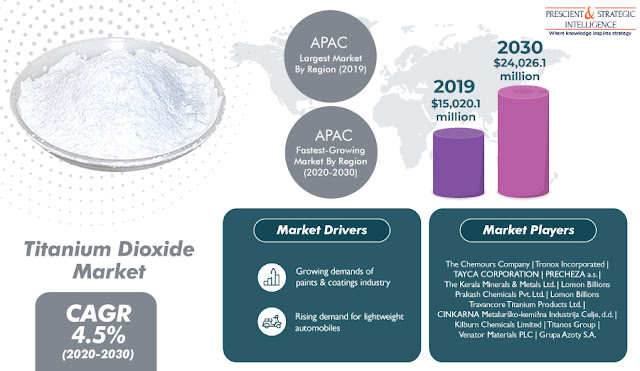
Additionally, the increasing adoption of lightweight vehicles will drive the titanium dioxide market at a CAGR of 4.5% during the forecast period (2020–2030). According to P&S Intelligence, the market will generate $24,026.1 million revenue by 2030. The mounting sales of lightweight vehicles can be attributed to the escalating concerns being raised over vehicular emissions, fuel efficiency of automobiles, and the surging carbon footprint. To meet the demand for such vehicles, automakers are using titanium dioxide-based coatings on polycarbonate structures in automobiles, as the compound can impart durability, scratch resistance, and stability to such structures.

Geographically, Asia-Pacific (APAC) is expected to dominate the titanium dioxide market during the forecast period, owing to the presence of a booming construction industry and the establishment of numerous manufacturing facilities in the region. The growth of the construction sector in APAC, on account of the mushrooming population and accelerating urbanization rate, is pushing up the requirement for paints and coatings, which is, in turn, creating a huge demand for titanium dioxide. Due to these factors, the APAC market will also witness the fastest growth throughout the forecast period.

Thus, the burgeoning demand for paints and coatings and rising shift toward lightweight vehicles will augment the consumption of titanium dioxide in the forthcoming years.

Booming Automobile Industry Augmenting Lead-Acid Battery Sales in APAC

The increasing deployment of hybrid electric vehicles (HEVs) and battery electric vehicles (BEVs) is driving the demand for lead-acid batteries across the world. The clean and energy-efficient transportation provided by these vehicles is fueling their worldwide popularity. Moreover, with the enactment of strict emission norms for conventional vehicles by the governments of several countries, many electric vehicle manufacturers such as Nissan Motor Corporation, Tesla Inc., and Ford Motor Company are launching new and technologically advanced electric vehicles.


As lead-acid batteries are used as the primarily power source in these vehicles, the surging deployment of these vehicles is propelling their demand across the globe. Besides this, the mushrooming popularity of non-conventional energy sources is also creating lucrative growth opportunities for the players operating in the lead-acid battery market. All European Union (EU) member nations have implemented countrywide renewable energy action plans, which are fueling the installation of offshore and onshore green energy plants in Italy, the U.K., Sweden, and Germany.

As lead-acid batteries are required in these installations for storing solar energy, the rapid development of these plants is driving their demand. Apart from this, the increasing urbanization and industrialization rates in several countries is also propelling the growth of the industry. As a result, the market revenue is predicted to grow from $56.9 billion in 2017 to $70.7 billion by 2023. Furthermore, the market will advance at a CAGR of 3.7% from 2018 to 2023, as per the forecast of the market research company, P&S Intelligence.

This will be because of the expansion of the automobile industry and the increasing installation of 4G telecom towers in the region. Due to the increasing disposable income of people, automobile sales are shooting up in India and China. This is causing the growth of the automobile industry in the region. Additionally, the large-scale installation of these towers is pushing up the requirement for UPS, which is, in turn, amplifying the sales of lead-acid batteries in the region.

Hence, it can be said without any hesitation that the sales of lead-acid batteries will surge sharply in the coming years, mainly because of the increasing deployment of electric vehicles and the development of green energy plants all over the world.

Growing Construction Sector Propelling Silane Sales

Silane is an inorganic compound, specifically a pyrophoric, colorless, toxic gas with a repulsive smell, which acts as a precursor to silicon element. Moreover, it has the ability to offer excellent resistance to chemicals, ultraviolet (UV) rays, and water and outstanding adhesion, which make it suitable as an ingredient for paints. Thus, the need for silane has been increasing in recent times in the paints and coatings industry.

Moreover, the requirement for paints and coatings is itself increasing across the world primarily due to the surging production of automobiles in emerging economies, such as India, Brazil, Indonesia, Thailand, and Malaysia. Therefore, the silane market is projected to grow at a CAGR of 4.3% during forecast period. According to P&S Intelligence, the market is expected to generate $2,047.0 million revenue in 2023 as compared to $1,577.9 million in 2017.

Additionally, with the rising disposable income of people, their living standard is increasing, which has expressively improved the construction sector in emerging economies across the world. Furthermore, the growing population has increased the demand for better civic infrastructure, transportation facilities, and housing. This drives the production of paints for automobiles and buildings, where silane is required in high volumes as a raw material. Therefore, with the growth in end-use industries, the demand for silane is projected to increase during the forecast period.

Since vehicle production and construction activities are the widest in the Asia-Pacific (APAC) region, it led the silane market in the past, and it is expected to witness the same trend in the foreseeable future. This can be ascribed to the high-volume application of the gas in the manufacturing of paints and coatings, adhesives and sealants, and rubber and plastics. In addition, the construction sector in APAC is observing significant growth due to the heavy investments by the governments of the regional countries to deliver affordable housing, which, in turn, boosts the demand for silane.

Thus, the burgeoning consumption of paints and coatings and growing construction sector will propel the adoption of silane in the coming years.

Usage of Cinnamaldehyde Rising in Agriculture Sector of Asia-Pacific

Cinnamaldehyde is added to improve the taste of medicines and foods and used as a flavoring agent in candies, liquid refreshments, chewing gums, and ice creams. Moreover, the chemical is used in combating bad breath and tooth decay and curbing bacterial growth in oral cavities, owing to its antifungal and antibacterial properties. Additionally, the antidiabetic property of cinnamaldehyde helps in raising the plasma insulin level and reducing the plasma glucose level. Additionally, the chemical aids in preventing corrosion in steel and other iron alloys in corrosive fluids.

Furthermore, the chemical is used in cosmetics and personal care items. The spurring demand for these products, especially in the emerging economies, owing to the booming geriatric population, is expected to drive the cinnamaldehyde market at a CAGR of 6.5% during the forecast period. The market stood at $183.7 million in 2016, and it is projected to reach $280.3 million by 2023. Moreover, the growing importance of personal grooming among teenagers and youths is driving the demand for cosmetic and personal care products, which require cinnamaldehyde in large quantities.

The source segment of the cinnamaldehyde market is bifurcated into natural and synthetic. In 2016, the natural category held the larger value share, while the synthetic category held the larger volume share. In the natural process, the chemical is obtained by the steam distillation of the essential oil extracted from cinnamon. It can also be derived from camphor and other Cinnamomum species, such as cassia. Whereas, in the synthetic process, the chemical is derived from acetaldehyde or cinnamyl alcohol and the aldol condensation of benzaldehyde.

According to P&S Intelligence, the Asia-Pacific region used the largest volume of cinnamaldehyde in the past, majorly on account of the growing cosmetics industry. This can be owed to the rising elderly population, burgeoning disposable income, and soaring consciousness about appearance among the young population. Moreover, a spike in the middle-class population in India has resulted in the high-volume consumption of personal and homecare products that have cinnamaldehyde as a key ingredient.

Thus, the antibacterial and antifungal properties of cinnamaldehyde have resulted in its increasing usage in the agricultural domain. Moreover, its usage as a flavoring agent and food additive will surge in the coming years due to the accelerating demand for packaged food products, globally.

Source: www.psmarketresearch.com

Why Is Textile Sector in ASEAN and South Asia Shifting To Waterless Dyestuffs?

Dyestuffs refer to water-soluble inexpensive materials that are used to impart color to fabrics. These substances comprise of pigments, azo acids, dyes, and intermediates. Dyestuff producers constantly work to improve the properties of such substances to meet the demands of new kinds of fabrics. In recent years, the textile industry has been increasingly focusing on developing advanced dyeing machinery to overcome the environmental issues caused by the existing dyes. These improvements are a result of extensive research and development (R&D) activities carried out in the textile sector.

The flourishing apparel industry is expected to drive the Association of Southeast Asian Nations (ASEAN) and South Asia dyestuff for textile market at a CAGR of 7.8% during the forecast period. The market revenue stood at $1,163.6 million in 2016 and it is projected to reach $1,938.9 million by 2023. The growth of the apparel sector can be attributed to the burgeoning demand for outerwear, innerwear, socks, t-shirts, jeans, shorts, trousers, dresses, and kids' wear, across the world.

According to P&S Intelligence, India used the highest volume of dyestuff in the textile industry in the recent past, due to the shutdown of several dye producing units in the U.S., the U.K., France, and Germany owing to the implementation of strict pollution control regulations in these countries. Moreover, the presence of flexible environmental legislations and the availability of cheap labor are also driving the production of dyes in India. 

Therefore, the growing apparel industry in the ASEAN and South Asia regions is expected to amplify the usage of dyestuffs in the forthcoming years.

Source: www.psmarketresearch.com

Sustainability Efforts Driving Bio-Based Polyethylene Terephthalate Usage

The soaring demand for bioplastics, increasing environmental problems caused by polyethylene terephthalate (PET) products, and rising research and development (R&D) activities by the market players are set to drive the bio-based PET market at a CAGR of 14.7% during the forecast period. The market was valued at $3,917.4 million in 2017, and it is projected to reach $8,682.6 million by 2023. Moreover, government initiatives to curb greenhouse gas (GHG) emissions have led to the increasing production of sustainable products, such as bio-based PET.

The industry segment of the bio-based PET market is categorized into packaging, textile, automotive, electronics, and others, which include horticulture and medical. During the historical period (2013–2017), the packaging category accounted for the largest market share due to the high demand for bioplastics for packaging organic food and premium products. The application of PET material is further increasing here for the production of bottles due to the rising investments in R&D by market leaders for the development of 100% bio-based PET bottles.

The automotive category is projected to exhibit the highest growth rate during the forecast period, on account of the soaring demand for environment-friendly dashboard components, seat covers, vehicle covers, and battery cases. Moreover, the bio-based PET material is being used in large volumes for the production of bags, bottles, cosmetic containers, trays, carpets, blister packs, foils, and sanitary products. This is because this material is fully recyclable, compostable, biodegradable, and renewable, as it is composed of 70% terephthalic acid (TPA) derived from fossil fuels and 30% ethanol glycol produced from plant matter.

Currently, the Asia-Pacific (APAC) region is dominating the bio-based PET market, and it is expected to maintain its position in the coming years. Moreover, the market is also set to witness the highest CAGR here as a result of the expansion of the bio-derived PET production capacity in India and China. Besides, the increasing consumption of fizzy soft drinks and alcoholic beverages and rising number of initiatives by governments and international regulatory bodies to curtail the emission of GHGs are expected to fuel the market growth in the region.

Thus, the increasing focus on the adoption of environment-friendly products is boosting the demand for plant-derived PET across the world.

Source: www.psmarketresearch.com

Self-Levelling Concrete Sales Expected To Explode in Asia-Pacific in Future

Due to the various advantages of self-levelling concrete over the conventionally used floor levelling concrete, it is increasingly being preferred across the world. Some of these advantages are its eight times faster setting characteristic than the traditional floor levelling concrete and its property of becoming suitable to be walked one a few hours after setting. Due to these characteristics, this material is increasingly being used in various residential and commercial applications.

Additionally, the surging demand for repairment and renovation of hospitals, malls, offices, and schools is also pushing up the requirement for the material in the commercial sector. This is, in turn, causing a sharp surge in the global self-levelling concrete market. Self-levelling concrete consists of a mixture of water and powder having an exclusive flow viscosity that allows it to spread on its own before setting. Toppings and underlayment are the two main types of self-levelling concrete used globally.

Between these two, the demand for the underlayment variants was found to be higher during the past few years. This was because these materials were extensively used in the commercial and residential sectors, on account of their ability to massively minimize surface imperfections and irregularities. Between commercial and residential sectors, the usage of self-levelling concrete was higher in the former in the years gone by, as per the observations of P&S Intelligence, a market research company based in India.

One of the major trends currently being witnessed in the industry is the huge improvements being made in the existing concrete materials. These improvements are aimed at reducing the material’s requirement for high water consumption, increasing its tensile strength, eliminating the need for experts for its handling, and enhancing its durability so that its usage doesn’t lead to the formation of cracks in floor coverings and the opening of floor joints. 

Hence, it is safe to say that the demand for self-levelling concrete will shoot up in the upcoming years, primarily due its various advantages over the traditionally used concrete and the increasing construction and infrastructural development activities all over the world.

Source: www.psmarketresearch.com

Demand for Insulation To Shoot Up in Asia-Pacific in Near Future

With the increasing industrialization and urbanization rates in several countries, the demand for industrial and residential insulation is rising sharply across the world. In the manufacturing industry, thermal and acoustic insulation is extensively required in stacks, boilers, turbines, exhausts, and incinerators. This is why the expansion of the manufacturing sector, especially in the developing nations of APAC such as India, China, Malaysia, Indonesia, Thailand, and the Philippines, is positively impacting the demand for insulation.

Besides, the surging investments being made in infrastructural development projects in developing countries such as India, China, Russia, and Brazil are creating lucrative growth opportunities for insulation producers across the world. In addition to this, the governments of many countries are taking measures for reducing the escalating energy costs and promoting energy efficiency, which is, in turn, pushing up the demand for insulation products in residential and industrial buildings, thereby causing the expansion of the global insulation market.

Depending on product, the market is classified into expanded polystyrene (EPS), extruded polystyrene (XPS), mineral wool, and glass wool. Out of these, the EPS category held the largest share in the market in 2017. This was credited to the large-scale usage of EPS wool in various acoustic and thermal insulation applications, because of its fire retardancy, durability, and low weight. When application is taken into consideration, the insulation market is divided into residential, non-residential, industrial, and heating, ventilation, and air conditioning (HVAC) and original equipment manufacturer (OEM).

Hence, the demand for insulation is certain to surge in the coming years, primarily because of the surging urbanization and industrialization rates and the increasing implementation of energy conservation policies by various governments across the globe.

Source: www.psmarketresearch.com

How Is Electric Vehicle Industry Fueling Virtual Power Plant Demand?

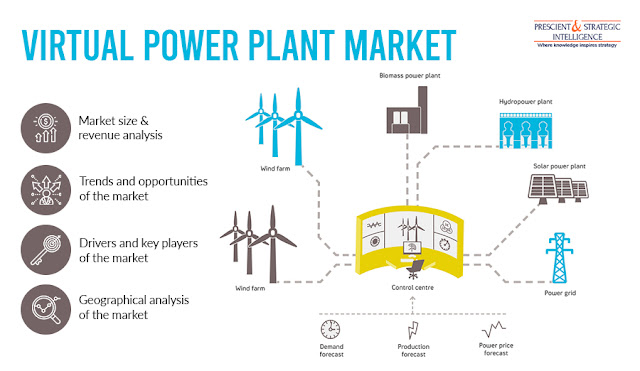
According to the International Energy Outlook 2019 published by the U.S. Energy Information Administration (EIA), renewable energy sources will generate 49% of global electricity by 2050. In the coming years, the expanding capacity of renewable power plants will augment the need for centralized infrastructure to facilitate the continuous flow of electricity. This will, therefore, accelerate the development of virtual power plants (VPPs) to integrate the newly installed renewable energy power plants with the centralized electricity distribution infrastructure.

Moreover, the soaring investments being made in the establishment of VPPs are expected to drive the virtual power plant market at a CAGR of 18.6% during the forecast period. The market revenue stood at $1,975.1 million in 2017 and it is projected to reach $5,510.2 million by 2023. For example, in 2018, Tesla Inc. announced its plan to establish a 250 MW VPP in Adelaide, South Australia. As compared to conventional energy power plants, VPPs require lesser capital for construction as well as management.

Nowadays, the expanding electric vehicle (EV) charging infrastructure, on account of rising EV sales, is resulting in the large-scale deployment of VPPs, globally. The escalating adoption of EVs, owing to the soaring concerns being raised over the pollution caused by diesel and petrol-powered vehicles, is expected to augment the need for such renewable power plants in the coming years. The International Energy Agency (IEA) estimates that at the current pace of EV production, 145 million electric cars, vans, buses, and heavy trucks will be operating across the world, by 2030.  

The technology segment of the virtual power plant market is categorized into mixed asset, supply side, and demand response. Among these, the demand response category accounted for the largest market share in 2017. This can be ascribed to the cost-effective development and exceptional operational performance of demand response technology-based VPPs. Owing to these advantages, North America is increasingly adopting such VPPs, to cater to the high electricity demand in the region. Of the North American countries, the U.S. will create a higher demand for such VPPs in the upcoming years.

Thus, the growing focus on non-conventional energy power plants, mounting investments being made in the establishment of VPPs, and improving EV charging infrastructure will fuel the development of VPPs in the coming years.

Source: www.psmarketresearch.com

Huge Revenue Growth Predicted in Qatar Facility Management Market During 2020—2030

The increasing awareness among the enterprises in Qatar about the protection of the physical assets has led to a high demand for facility management services. Since physical assets require huge investments, effective asset protection minimizes the operational expenditure on them and helps companies in achieving profitability. The surging requirement for asset protection has encouraged facility management service providing companies to integrate infrastructure, sustainable environment, real estate, technology, and people to achieve optimum efficiency.

Moreover, the surging focus of the government on the diversification of its economy will drive the Qatar facility management market at a 16.4% CAGR during 2020–2030. The market was valued at $4,613 million in 2019, and it is expected to reach $21,975.1 million by 2030. The government plans to boost its economic growth through the Qatar National Vision 2030, which is based on four key aspects, namely environment development, economic development, social development, and human development. Qatar essentially aims to reduce its economic dependence on the oil and gas industry through this plan.

The service segment of the Qatar facility management market is categorized into property, security, cleaning, environmental management, support, and catering. Among these, the property category generated the highest revenue till 2019 due to a boom in the construction industry of the country. The Qatar National Vision 2030 and FIFA World Cup 2022 are giving a boost to the construction sector, which, in turn, is driving the demand for property management services to meet the requirements of the newly commissioned buildings in the nation.

These services are required in the commercial, industrial, and residential sectors for maintaining and managing the premises. According to P&S Intelligence, commercial facilities will be the fastest adopters of facility management services in Qatar, primarily on account of the growing need for clean and attractive spaces to attract tourists and locals. Besides, the surging awareness among end users about commercial building management, to maximize the operational expenditure, is accelerating the demand for facility management services in Qatar.

Thus, the growing awareness regarding asset protection and rising focus of the government on economic diversification will fuel the demand for facility management services in Qatar in the foreseeable future.

Source: www.psmarketresearch.com

How Is Construction Sector Accelerating Generator Set Sales?

The increasing construction of data centers has amplified the requirement for gensets, globally. The surging amount of data being generated and consumed has boosted the demand for infrastructure to support data access, analysis, and collation. In the coming years, the need for data centers is expected to surge, due to the growing usage of internet of things (IoT), accounting services, intelligent personal assistants, digital currencies, and autonomous cars. This will, further, amplify the need of generators, as they serve the prime and auxiliary power requirements for such places.

Additionally, the surging requirement for these power-generating appliances from the construction sector will accelerate the genset market at 5.8% CAGR during 2020–2030. According to P&S Intelligence, the market value will rise from $17,592.6 million in 2019 to $27,863.0 million by 2030. Rapid industrialization in emerging economies and economic recovery in developed nations will result in the rise of construction activities in the coming years. For instance, the U.K., the U.S., India, Indonesia, and China are expected to record the maximum number of construction activities in the foreseeable future.

To keep up with the increasing demand, market players are taking numerous measures to boost the sales of generators. For example, in 2018, Mahindra Powerol Ltd., Cummins Inc., Atlas Copco AB, and Caterpillar Inc. launched new generators to expand their product portfolios. The new gensets adhere to the environmental norms and offer improved features, which act as solutions to the challenges faced by diesel and gasoline generators. Apart from this, several market players are also engaging in partnerships to offer customized power solutions, develop and localize production, and reduce their capital expenditure.

Whereas, the Middle East and African (MEA) genset market is expected to witness the fastest growth in the near future, due to the poor grid connectivity in the region. Additionally, rapid industrialization and increasing commercial activities in the U.A.E., Turkey, Egypt, and Saudi Arabia will also boost the installation of power generation equipment in the coming years. Besides, the expansion of the construction sector, on account of infrastructure development plans like the Saudi Vision 2030, and upcoming mega events like the 2022 FIFA World Cup (Qatar), will amplify gensets sales in MEA in the future.

Thus, the expanding construction sector and the escalating requirement for data centers will accelerate the adoption rate of gensets in the future.

Source: www.psmarketresearch.com

Shallow Waters: Viable Location for Offshore Wind Turbine Installation

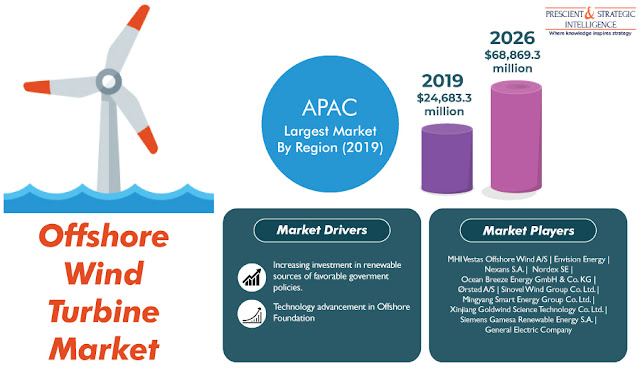
Increasing awareness about the advantages of non-conventional energy sources has resulted in huge investments in the offshore wind energy sector. Moreover, the rapid depletion of fossil fuels and hazardous impacts of these conventional energy sources on the environment have encouraged more funding in the wend energy industry.  Governments across the world are making investments in the renewable energy to cater to the future energy demands, while minimizing the conventional energy supply. These factors help the offshore wind turbine market to grow from $24,683.3 million in 2019 to $68,869.3 million by 2026.

Offshore wind turbines are mostly installed at shallow-water-depth area, as this region is more convenient for installing windmills, in comparison to deep-water region. Moreover, repair and maintenance of turbines in shallow water are easier, as compared to turbines in deep-water and transitional areas. Additionally, the development of cost-effective and reliable foundations for offshore wind turbines and bottom-fixed foundations, such as monopile, will boost the installation of windmills at the shallow-water-depth region, in the coming years.

Currently, the offshore wind turbine market offers turbines with varying capacities— up to 3 megawatt (MW), 3 MW–5 MW, and >5 MW. In the coming years, the installation of turbines with 3 MW–5 MW capacity will surpass the installation of up to 3 MW and >5 MW turbines. This is because 3 MW–5 MW turbines have high electricity generation capacity, owing to which energy companies will make huge investments for the construction of such plants. Moreover, low maintenance and operational costs of such turbines will result in their largescale installation.

Turbines of various capacities can either be fixed or kept afloat on the surface of water. Owing to the economic feasibility, easier commissioning, and decommissioning processes of fixed installations than the floating installations, public and private organizations prefer the former than the latter. The cables of the fixed wind plants remain in their position and are not deterred by weak waves and currents. Whereas, in the floating wind plants, cables are very vulnerable and any movement or breakage of wires will obstruct energy flow and generation. 

Thus, the growing inclination toward renewable energy sources, on account of rising awareness about the benefits of green energy and drawbacks of fossil fuels, will accelerate the installation of wind turbine at offshore sites, worldwide.

Source: www.psmarketresearch.com

Why Are Developing Countries Requiring Power Rental Services in Abundance?

Outdated power plants are a major source of environmental pollution and are extremely inefficient. Owing to these disadvantages, several governments are implementing stringent regulations to shut down outdated power plants. Even though these plants are inactive, they need power on rent for the redevelopment process. The increasing number of outdated power plants will fuel the power rental market at a CAGR of 10.3% during forecast period. The market was valued at $9,167.6 million in 2017 and it is projected to reach $16,855.5 million revenue by 2023.

Additionally, the burgeoning demand for power from developing countries, such as India, China, South Korea, Thailand, Turkey, Qatar, and Brazil, will also augment the market growth during the forecast period. These countries are witnessing technological advancements and a huge influx of foreign investments in the construction industry, owing to which, the need for rented power is likely to surge in the forecast years. At present, the abundant opportunities being offered by these countries are being leveraged by the European and North American market players.

According to P&S Intelligence, the Middle East and African (MEA) power rental market generated the highest revenue during the historical period (2013–2017) and it is expected to demonstrate the fastest growth during the forecast period as well. This can be ascribed to the escalating demand for electricity from the construction sector and the soaring need to supply power to outdated power plants in the region. Besides, the mounting infrastructure investments being made in countries such as Oman, Saudi Arabia, and the U.A.E. will contribute to the market growth in the coming years. 

Thus, the surging number of outdated power plants and increasing power demand from developing countries will accelerate the need for rented power in the foreseeable future.

Surging Aircraft Production Augmenting Aerospace Composite Sales

The extensive usage of carbon fiber composites in aircraft manufacturing is pushing up the demand for aerospace composites across the world. Aircraft manufacturing companies are focusing heavily on high-performance and lightweight structural materials for reducing their operational costs and improving the fuel economy of their aircrafts. Due to the various beneficial traits of carbon fiber composites such as high stiffness and tensile strength and low weight, they are increasingly being used in the aerospace industry.

Apart from the above-mentioned factor, the expansion of the manufacturing sector in the developing countries such as India, Indonesia, and China, due to the rising urbanization rate, surging disposable income of people, and mushrooming middle-class population, is also creating lucrative growth opportunities for the aerospace composite manufacturers. Furthermore, with the growing popularity of air travel, the sales of commercial aircrafts are rising and the air traffic volume is soaring. This is further boosting the requirement for aerospace composites.

Another major factor driving the worldwide demand for aerospace composites is the ballooning usage of composites in the military aviation sector. These factors are subsequently propelling the growth of the global aerospace composites market. Aramid fiber, carbon fiber, and glass fiber are the most widely used types of aerospace composites across the world. Out of these, the demand for carbon fiber was found to be the highest during the last few years.

This was because of the large-scale manufacturing of commercial aircrafts across the world, on account of the surging air passenger traffic volume. Interior and exterior are the two major application areas of aerospace composites. Between these, the usage of these composites will rise rapidly in interior applications in the forthcoming years. This will be because of the soaring usage of composite materials for manufacturing aircraft parts such as seat frames, lavatories, galleys, cabin components, ceiling panels, and floor boards. 

Geographically, the sales of aerospace composites will boom in Europe and North America in the upcoming years, as per the estimates of P&S Intelligence, a market research company based in India. This is ascribed to the existence of several well-established industry players and original equipment manufacturers (OEMs) in the regions and their growing focus on reducing the overall aircraft weight. Besides, the demand for these products will also shoot up in Latin America and Asia-Pacific in the coming years.

Hence, it can be safely said that the demand for aerospace composites will surge in the upcoming years, primarily because of their growing requirement in aircraft manufacturing and military aviation applications across the world.

Source: www.psmarketresearch.com

How Is Pharmaceutical Industry Propelling Methionine Sales?

Methionine, one of the nine essential amino acids, serves as a precursor to every sulfur-containing amino acid and their derivates. It is constantly regenerated from homocysteine through one-carbon metabolism. This amino acid is extensively found in chicken breast, eggs, salmon, mahi-mahi or dolphinfish, and halibut, spinaches, asparagus, mushrooms, zucchini, and dairy products. Additionally, methionine also acts as an antioxidant by providing sulfur atoms in cysteine synthesis. Inadequate intake of methionine can, therefore, have an adverse impact on the synthesis of cysteine, and hence glutathione (GSH), one of the primary endogenous antioxidants.

Owing to the high-volume methionine content in eggs and meat, the poultry industry is creating a high demand for animal feed, as this substance helps in the development and growth of the digestive tract of animals that are vital for enhancing muscle mass and increasing egg production of poultry animals. Thus, the surging consumption of animal feed in the poultry sector will accelerate the methionine market at a CAGR of 10.2% during forecast period. The market revenue stood at $5,114.3 million in 2017 and it is expected to reach $9,121.9 million by 2023.

According to P&S Intelligence, Asia-Pacific dominated the methionine market and adopted this essential amino acid at the highest rate in the recent past. The region is expected to adopt methionine at the fastest pace in the coming years as well. This can be ascribed to the burgeoning demand for animal feed in the region. Moreover, the presence of leading methionine manufacturers in the region will also fuel the production of this acid in the coming years. In the coming years, China will consume the highest quantity of methionine in APAC region.

Therefore, the surging need for animal feed and increasing consumption of pharmaceutical products will boost the need for methionine in the forthcoming years.

Source: www.psmarketresearch.com

Rising Packaged Food Consumption in APAC Fueling Printing Ink Sales

Printing inks are pastes or liquids that are used to color a surface to produce text, a design, or an image. These inks contain dyes or pigments that are widely used to color newspapers, cardboard, ceramic tiles, and books and magazines.  The dyes or pigments of these inks are mixed with water, oil, or solvents to form liquids or pastes. Such inks are used in the labeling and packaging, publication, and commercial printing applications all over the world.

The surging consumption of packaged food items, on account of the changing lifestyle and increasing work pressure, will steer the APAC printing inks market at a CAGR of 4.6% during forecast period. According to P&S Intelligence, the market has the potential to reach $7,000.2 million by 2023 from $5,344.1 million in 2017. Moreover, the escalating gross domestic product (GDP) of APAC nations, soaring disposable income of people, and booming youth population will fuel the consumption of packaged food items, which is a key application area for printing inks.


Apart from this, the flourishing packaging industry of APAC for other products will also boost the consumption of printing inks in the coming years. Just like food and beverage, packaging has become an integral part of the consumer goods and healthcare industries, as these sectors need accurate labeling to ensure the sale of authentic final products to end users. With the rising need for food products, healthcare items, and consumer goods, primarily on account of the mounting disposable income, the consumption printing inks will amplify in the foreseeable future.

In recent years, Indonesia, China, and India have emerged as the leading consumers in the APAC printing inks market owing to the rapid commercialization and industrialization in these nations. Moreover, the improving lifestyle of the people of these countries will augment the need for printing inks due to the rising consumption of packaged food products and consumables. Among APAC nations, China consumes the highest quantity of such inks due to the burgeoning demand for packaging and paper media and escalating literacy rate in the country.

Thus, the rising uptake of packaged food items and growing packaging sector in APAC will boost the consumption of printing inks in the region.

Source: www.psmarketresearch.com

Sales of Diesel Exhaust Fluids Set To Shoot Up in Asia-Pacific in Near Future

Historically, the sales of diesel exhaust fluids (AdBlue) were driven by the extensive deployment of medium- and heavy-duty commercial vehicles such as mining and construction vehicles and trucks. However, the increasing enactment of stringent vehicular emission norms by the governments of several countries and the growing requirement for higher fuel efficiency, especially in the European, Asian, and North American countries are fueling the requirement for these fluids in passenger vehicles as well. 

Additionally, the mushrooming sales of heavy-duty vehicles such as trailers and trucks, on account of the rising industrialization rate and the rapidly improving logistics infrastructure in order to ensure the timely delivery of products in remote areas, are also fueling the demand for these fluids across the globe. As per reports, nearly four million trucks are predicted to be sold globally by 2023. This will subsequently cause the expansion of the diesel exhaust fluid market. 

Besides the aforementioned factors, the increasing number of construction and infrastructural development projects being launched in the developing nations such as India, China, Russia, and Brazil is also pushing up the demand for diesel exhaust fluid. This is because these projects are fueling the expansion of the logistics and transportation industries. Hence, it is safe to say that these factors are driving the growth of the diesel exhaust fluid market.

Additionally, the growing demand for product transportation is augmenting the deployment of heavy-duty trucks, which is, in turn, propelling the requirement for bulk storage solutions. Geographically, the diesel exhaust fluid (AdBlue) market will exhibit rapid expansion in Asia-Pacific (APAC) in the coming years, as per the estimates of the market research company, P&S Intelligence. This will be because of the surging sales of heavy- and medium-duty vehicles and the implementation of strict emission norms in the regional countries. 

Hence, it can be safely said that the demand for diesel exhaust fluid will shoot up in the forthcoming years, primarily because of the growing enactment of strict emission norms and the mushrooming sales of heavy-duty vehicles, on account of the booming transportation and logistics industries and the launch of infrastructural development projects in various countries.

Booming Automotive Industry Fueling Global Sales of 3D Printing Materials

Manufacturing firms are using 3D printing to explore opportunities offered by additive manufacturing. Production units are integrating additive manufacturing into their organization to yield faster and better results. Over the years, 3D printing has gained popularity in additive manufacturing, which was previously based on the subtractive process in which wasted raw materials are reused several times. For example, automotive production facilities use left-over metal sheets to develop metal plates to be reused for the manufacturing of other parts. However, in recent years, the usage of 3D printing materials has escalated, due to the growing adoption of 3D printing technology.

According to P&S Intelligence, the 3D printing materials market stood at $558.4 million in 2017 and it is expected to surpass $1,365.6 million by 2023. Educational institutions are using 3D printing to boost the cognitive ability of students and transform their ideas into physical form. This printing technology is enabling students to design basic 3D shapes, on laptops and tablets, and explore novel ideas. 


Moreover, the automobile industry is also using 3D printing materials in large quantity as 3D-printed vehicle components are lightweight and consume less energy during manufacturing process. This sector uses the 3D printing technology to design automotive parts that have complex geometries and are difficult to develop using conventional methods. With the booming sales of automobiles, especially in countries like India, Brazil, Indonesia, and China, the consumption of such materials will escalate in the coming years. 

Apart from the manufacturing, automotive, and education sectors, the aerospace and defense industry also uses 3D printing materials like plastics, ceramics, and metals to produce gigantic and complex parts. This is due to the growing adoption of 3D printing-integrating manufacturing technique in this sector. The industry mostly uses titanium to print prototypes or parts through 3D technique. Titanium is one of the most expensive substances used in production process of aircraft components. Additionally, these printing materials also find wide application in the production of consumer goods and medical and dental products.

Owing to the mounting demand for 3D printing materials from various sectors, market players like Stratasys Ltd., Formlabs Inc., Solidscape Inc., 3D Systems Corporation, The ExOne Company, EnvisionTEC GmbH, Royal DSM, and LPW Technology Ltd. are introducing several varieties of such products and 3D printing equipment. These companies are focusing on product launches and partnerships to expand their customer base. For example, EnvisionTEC, in February 2018, introduced Vida cDLM, a large, high-speed 3D printer to allow dental professionals to print 3D orthodontic models and mouth guards in reasonable time. 

Thus, the growth in the automotive, manufacturing, aerospace and defense, and education sectors will amplify the usage of 3D printing materials in the near future.

Source: www.psmarketresearch.com

Why Is Consumption of 3D Printing Filaments Booming in Aerospace Sector?

As the preference and needs of people change, so must the design of and functionalities offered by various products. To achieve this, even the manufacturing technology must change, because the processes once relevant won’t always continue to be for long. Thus, with the increasing demand for customized products that not only suit people’s varied requirements but also complement their personality, industrialists are rapidly innovating their technology.

P&S Intelligence, therefore, considers the need for mass product customization a key factor that will propel the 3D printing filament market from $693.1 million in 2019 to $7,082.0 million by 2030, at a healthy 26.8% CAGR during 2020 and 2030. This is because 3D printing, or additive manufacturing, is a modern production technology that reduces the need for pre-casting and making molds for customizing products. This not only speeds up the actual manufacturing process but also makes it cost-effective for companies, which ultimately leads to a cost reduction for the end user.

Aerospace & defense, industrial, automotive, healthcare, consumer goods, and others are the categories under the application segment. Among these, the aerospace & defense category dominated the 3D printing filament market during the historical period (2014–2019) because such companies are using this manufacturing technique to save on operational costs. Moreover, aerospace & defense components are becoming increasingly complex, which is making it difficult to produce them via conventional techniques. For instance, GE is using 3D printing for miniature jet engines and aircraft fuel nozzles, while Boeing is using 3D-printed components in the flight deck of the 777X.

In the coming years, the demand for 3D printing filaments will shoot up in Asia-Pacific (APAC). The manufacturing industry of APAC, though the largest in the world, still lags behind in the adoption of the latest technologies. However, with government initiatives to augment the manufacturing output, such as the Made in China 2025, Making Indonesia 4.0., and Make in India initiatives, industrialists are receiving heavy funding, which is allowing them to innovate their processes and procure expensive machines, such as 3D printers.

Hence, with advancements in the manufacturing technology, the demand for 3D printing filaments will keep increasing.

Why Is Asia-Pacific (APAC) Largest Tobacco Packaging Market?

The most-important factors helping in the growth of the tobacco packaging market are the rising demand for tobacco products and increasing popularity of premium tobacco products. As a result, the revenue generated from the sale of packaging materials used on tobacco products is expected to increase from $19,134.6 million in 2019 at a CAGR of 3.7% during the forecast period (2020–2030). A wide range of tobacco products are consumed around the world, including cigarettes, cigars, chewing tobacco (called gutkha in India), and bidis.

Thus, the key reason behind the growth of the tobacco packaging market is the rising usage of tobacco products. Nicotine, the key chemical in tobacco leaves, is a mood-altering and psychoactive compound, which fires up the dopamine receptors in the brain. The release of dopamine causes happiness, a feeling the body and the mind can never get enough of. Thus, with the increasing stress level across the globe due to work pressure, family pressure, peer pressure, money issues, and general depression, more and more people are turning to tobacco and other happiness-causing substances.

Currently, the highest demand for tobacco packaging materials is witnessed in Asia-Pacific (APAC), simply because it is the largest tobacco consumer in the world. As per the WHO, China was home to 300 million, or one-third of the world’s tobacco smokers in 2019. Additionally, China National Tobacco Corporation is responsible for almost one-third of the global cigarette manufacturing, which creates a high demand for materials for packaging the leaves. To fulfil the increasing demand for such products, advancements are being brought about in the packaging materials and the packaging technology.

In 2019, the tobacco packaging market was consolidated, with a handful of major companies holding the majority of the share. Key players in the industry are Amcor Plc, ITC Limited, International Paper Company, Mondi Plc, Smurfit Kappa Group Plc, Packaging Corporation of America, Sonoco Products Company, Winkel Verpackungen GmbH, WestRock Company, Bihlmaier GmbH, Duke Packaging, TFP Sp. z o. o., Leser GmbH, Emenac Packaging, and Stora Enso Oyj. To get ahead of their competitors, these companies are engaging in product launches, mergers and acquisitions, and facility expansions.

Thus, the rising demand for tobacco products is leading to a high-volume requirement for the associated packaging materials.

Green Chemicals Market Set to Witness Huge Revenue Explosion Between 2019 and 2030

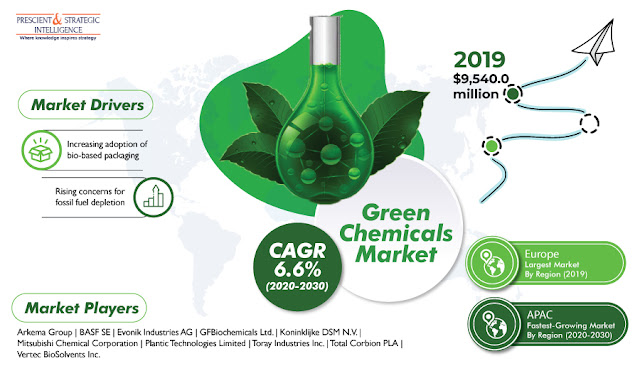
The global green chemicals market attained a valuation of $9,540.0 million in 2019 and it is predicted to generate a revenue of $18,474.2 million by 2030. Furthermore, the market will progress at a CAGR of 6.6% between 2020 and 2030, as per the forecast of the market research company, P&S Intelligence. The major factors driving the advancement of the market are the growing popularity of bio-based packaging and the rapidly depleting reserves of fossil fuels around the world.

Besides the aforementioned factors, the mushrooming demand for ready-to-go food items is also fueling the surging popularity of organically packaged and bio-based packaging foods, especially in countries such as Germany, the U.K. and the U.S., which is, in turn, propelling the expansion of the green chemicals market across the globe. This is because green chemicals are heavily used in these packaging materials. This is subsequently creating lucrative growth opportunities for green chemicals producing companies all over the world.

Depending on application, the market is classified into personal care, food & beverages, automotive, packaging, agriculture, electrical and electronics, textiles, paints and coatings, and construction categories. Out of these, the food & beverages category is predicted to register the highest growth in the market in the forthcoming years. This will be because of the ballooning requirement for food additives made from various natural ingredients such as organic acids like lactic acid, which is heavily used for preserving food items. 

On the other hand, the personal care category is predicted to demonstrate the fastest growth in the market in the upcoming years. This is credited to the rising public awareness about the various beneficial traits of bio-based personal hygiene and beauty products over the conventionally used synthetic chemical-based beauty products. Additionally, the regular usage of conventionally used synthetic beauty products negatively affects the skin, due to the existence of huge amounts of petroleum-based chemicals in these products.

Hence, it can be said with full surety that the market will demonstrate huge expansion across the world in the coming years, mainly because of the growing demand for eco-friendly chemicals and the rising public awareness about the environmental degradation caused due to the usage of synthetic chemicals.

Source: www.psmarketresearch.com

COVID-19 Boosting Production of Medical Adhesives for PPE Production

The adoption of medical adhesives is increasing, owing to the surging health awareness and enhancing macroeconomic factors in developing countries, across the world. Over the years, the economic conditions of India, Brazil, and China have significantly improved, on account of the rising gross domestic product (GDP) of these countries. Economic betterment has fueled the demand for medicines, medical devices and equipment, personal protective equipment (PPE) kits, and pharmaceutical products in these nations. Producers of these medical products require adhesives to provide accurate structure and strength to these items. 

Moreover, the outbreak of COVID-19 has amplified the need for medical products like PPE kits, masks, syringes, and blood and saline tubes, which require adhesives in large quantities. The increasing requirement for such products, on account of rising impact of this pandemic will fuel the medical adhesives market at 2.3% CAGR during 2020–2030. The market was valued at $8,714.9 million in 2019 and it is projected to reach $16,367.2 million by 2030. To contain the spread of the virus, hospitals and outpatient facilities are using disposable medical products in abundant quantity.

Thus, the growing requirement for medical products and bio-adhesives have inspired market players like Henkel AG & Co. KGaA, Cryolife Inc., 3M Company, The Dow Chemical Company, Ashland Global Specialty Chemicals Inc., Avery Dennison Corporation, Arkema S.A., Master Bond Inc., Baxter International Inc., and H.B. Fuller to launch a number of new and advanced products. For instance, in November 2019, Bostik, an Arkema Group company introduced a new range of engineering adhesives, namely Born2Bond. These adhesives are developed for vehicles, medical devices, electronics, and luxury packaging.

According to P&S Intelligence, North America is the largest consumer of medical adhesives in the world. This is owing to the high demand, high purchasing power, and technological advancements in the healthcare sector. Besides, the huge healthcare spending in the form of government-administered and funded programs, such as the Medicaid, the veterans’ health administration, the Medicare, and the children’s health insurance program, will boost the adoption of medical products like needles, PPE kits, syringes, and thermometers that use adhesives in large volumes.

Thus, the booming awareness regarding healthcare and the rising cases of COVID-19 will fuel the production of medical adhesives in the near future.

Source: www.psmarketresearch.com

How Is High Volume PVC Demand Propelling Chlorine Production?

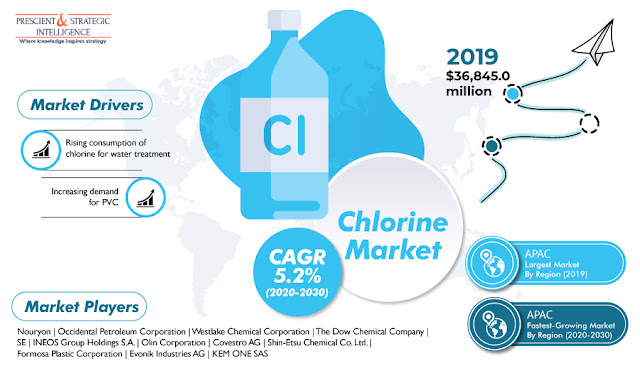
Chlorine is extensively used in the chlorination process required for the manufacturing of polyvinyl chloride (PVC), due to the enhanced thermal stability and higher melt viscosity offered by this gas during the production process. Huge quantities of PVC are used in windshield system components in the automotive industry, non-breakable components in the medical sector, and piping and siding applications in the building and construction industry. Thus, the rising usage of PVC in these application areas will augment the consumption of chlorine in the foreseeable future.

Additionally, the spurring demand for treated water is expected to drive the chlorine market at a CAGR of 5.2% during the forecast period (2020–2030). The market stood at $36,845.0 million in 2019, and it is projected to reach $63,121.6 million by 2030. Developing countries, such as Brazil, Thailand, and India, are increasingly focusing on raising public awareness regarding the harmful effects of consuming contaminated water and its role in amplifying the cases of typhoid, cholera, Hepatitis A, and Hepatitis E. As chlorine can terminate bacteria and other pathogens, it is being increasingly used in water treatment plants.

According to P&S Intelligence, Asia-Pacific (APAC) consumed the highest volume of chlorine in the past and it is expected to continue maintaining this trend in the foreseeable future as well. This can be ascribed to the escalating need for the chemical in China, Thailand, and India for manufacturing EDC/PVC. These countries are recording high volume production of EDC/PVC, due to its spurring requirement in insulation, door sidings, shingles, roofing, and flooring applications. Moreover, the growing public awareness regarding water-borne diseases will propel the usage of chlorine for water treatment in APAC in the coming years.

Moreover, the APAC chlorine market is expected to demonstrate the fastest growth during the forecast period, owing to the high demand for chlorine in the paper and pulp industry. The chemical imparts a white appearance to paper by removing lignin, a wood fiber element that offers a yellow appearance to paper under sunlight. The expansion of the paper and pulp sector in the region will, therefore, facilitate the market growth in APAC in the forecast years. 

Thus, the soaring PVC need and the escalating public awareness regarding water-borne diseases will supplement the production of chlorine in the foreseeable future.

Source: www.psmarketresearch.com

Growing Pharmaceuticals Industry To Boost Magnesium Stearate Market

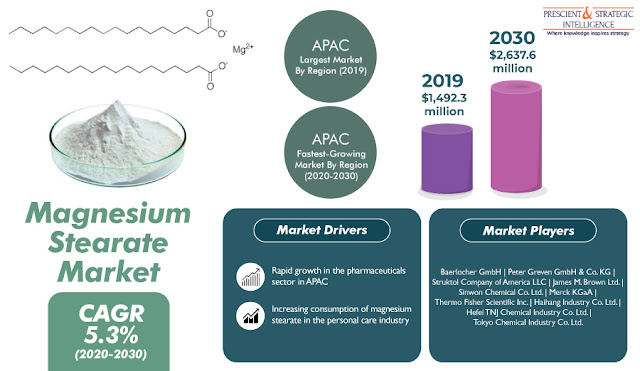
Factors such as the rapidly growing pharmaceuticals industry in Asia-Pacific (APAC) and the rising use of magnesium stearate in the personal care sector are projected to propel the growth of the magnesium stearate market at a CAGR of 5.3% during the forecast period (2020–2030). According to P&S Intelligence, the market generated $1,492.3 million revenue in 2019, which is expected to reach $2,637.6 million by 2030. Moreover, the market is witnessing the surging consumption of this chemical as a food additive in the food and beverages industry. 

One of the prime factors propelling the magnesium stearate market is the rapid growth in the pharmaceuticals industry in APAC. Pharmaceutical drug manufacturers are widely using magnesium stearate as an inactive ingredient, to avoid the sticking of ingredients to manufacturing tools. Additionally, this chemical also serves as a low-cost release agent in the industry. With the rise in the production of pharmaceuticals in the developing countries of the region, such as India, China, and Indonesia, the demand for the compound is increasing.


Moreover, the surging use of this chemical in the personal care sector is another key factor driving the magnesium stearate market. Magnesium stearate can serve as a lubricant and excellent texturizer in the production of cosmetics. Also, the compound is widely applied as a thickening agent in haircare products and creams. Due to the expanding personal care industry, the demand for this chemical is increasing. With the rising consumer spending in emerging economies, the usage of personal care products is increasing, which, in turn, drives the market.

Geographically, the APAC magnesium stearate market accounted for the largest share in 2019, and it is also projected to record the highest CAGR during the forecast period. This is due to the surging consumption of the chemical in end-use industries such as pharmaceuticals, plastics, food and beverages, and personal care. Moreover, chemical manufacturers in regional countries are focusing on facility expansions to meet the high demand from the end-use sectors. Furthermore, the growing incidence of several diseases is raising the need for medicated drugs, which, in turn, is driving the market.

Thus, the rising use of magnesium stearate in the personal care sector and the growing pharmaceuticals industry are expected to propel the demand for the salt during the forecast period.

Source: www.psmarketresearch.com
How Will Vast Population Amplify Agricultural Adjuvants Sale Worldwide?

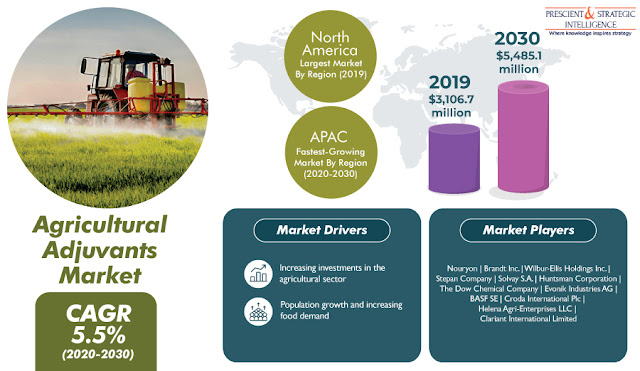
According to the World Population Prospects 2019, by the United Nations, the global population is likely to grow from 7.7 billion in 2019 to 9.7 billion by 2050. The surging population will create additional demand for food crops, cash crops, and horticulture crops in the coming years. The rising need for these crops will amplify the usage of adjuvants in the agricultural sector, as these agrochemicals help in enhancing productivity. This will, therefore, aid the agricultural adjuvants market to grow from $3,106.7 million in 2019 to $5,485.1 million by 2030, registering a CAGR of 5.5% during 2020–2030.

Moreover, the soaring investments and capital flow in the agriculture sector, to develop new products for attaining higher yield and better crop quality, will also drive the agricultural adjuvants demand in the coming years. In recent years, there has been a considerable rise in direct investments in the agricultural industry. Moreover, the escalating focus on farm robotics, farm management, new farming systems, farm agrochemicals, and supply chain technologies will also support market growth in the coming years.

According to P&S Intelligence, North America consumed the highest volume of agricultural adjuvants in the past and it is expected to maintain this trend in the coming years as well. This is ascribed to the presence of local manufacturers, availability of a wide range of products, and government support to adjuvant manufacturing companies and related agrochemical firms. Moreover, customer appreciation policies of these companies are also steering the adoption of agricultural adjuvants in the region.

Whereas, the Asia-Pacific (APAC) agricultural adjuvants market is expected to witness the fastest growth during the forecast period. This will be due to the increasing usage of these agrochemicals in India and China, owing to their vast population base, which requires agricultural products in abundance. For instance, India and China are expected to add around 2.3 billion people to the world population by 2050. Moreover, the surging nutritional requirements in the region will also drive the demand for agricultural adjuvants in the foreseeable future. 

Thus, the booming global population and the soaring agricultural investments will boost the usage of adjuvants in farmlands and agricultural installations in the coming years. 

How Is Agriculture Sector Supplementing India Single-Cylinder Pumpset Market Growth?

The rising pressure on the agriculture sector, on account of the burgeoning population; and increasing government support for the industrial sector are expected to drive the Indian single-cylinder pumpset market at a 5.3% CAGR during the forecast period (2020–2030). According to P&S intelligence, the market was valued at $1,126.8 million in 2019 and it is projected to reach $1,834.3 million by 2030. Currently, the market is dominated by Kirloskar Oil Engines Ltd., owing to its well-established distribution network across the nation.

The rising pressure on the agriculture industry, on account of the surging population, fuels the Indian single-cylinder pumpset market growth during the forecast period. According to the World Population Prospects 2019, the population of India is estimated to rise from 1.36 billion in 2019 to 1.45 billion by 2050. The vast population pool will generate high demand for cash crops, horticulture crops, and food crops, owing to which the usage of pumpsets on arable land is surging at a rapid pace. Additionally, strong government support to the agriculture sector will also support the market growth. 

The increasing government support for the industrial sector is also driving the market growth. The pumpsets are widely used in the oil and gas, power generation, metal and mining, and water and wastewater management industries. In recent years, these industries have witnessed notable growth, due to the surge in investments and strong government support. For instance, government initiatives, such as Ujwal DISCOM Assurance Yojana, Integrated Power Development Scheme, and , Deen Dayal Upadhyay Gram Jyoti Yojana, are fueling the growth of the market for pumpsets in the country.

Geographically, Uttar Pradesh accounted for the largest share in the Indian single-cylinder pumpset market in 2019, due to the rising demand for these systems in the industrial and agriculture sectors. As the economy of this state is mostly dependent on agriculture, it generates the significant demand for single-cylinder pupmsets. Whereas, the market in Punjab & Haryana is expected to showcase the fastest growth in the forecast years, owing to the large-scale agriculture activities, which require groundwater for irrigation purposes. 

Thus, the spurring demand for agricultural produces and the expanding industrial sector will facilitate the market growth throughout the forecast period.

Source: www.psmarketresearch.com

Why will Polyester Hot Melt Adhesive Sales Boom in Asia-Pacific in Future?

With the boom in the packaging industry, the demand for polyester hot melt adhesives is growing rapidly across the world. This is because these adhesives are extensively used in packaging applications, because of their high stability and temperature resistance. Moreover, the expansion of the packaged food and beverage industry, on account of the rising popularity of packaged foods, dairy products, bottled water, and fruit juices is positively impacting the worldwide demand for polyester hot melt adhesives.

These adhesives are also heavily used in the packaging of medial tapes, wound dressing materials, and band-aids. Apart from the surging packaging industry, the soaring requirement for lightweight automotive materials is also driving the demand for polyester hot melt adhesives across the world. Conventionally, the automobile industry relied heavily on mechanical fasteners such as welds, bolts, and nuts for bonding automotive components and parts. However, these days, the popularity of these materials is falling rapidly.

Globally, the polyester hot melt adhesives market will demonstrate the highest growth rate in the Asia-Pacific (APAC) region in the coming years, as per the forecast of P&S Intelligence, a market research company based in India. This will be because of the surging investments being made in the industry in the developing countries such as India, China, Thailand, and Vietnam. Moreover, China is a manufacturing center and one of the largest exporters of electrical and electronic components in the world.

Therefore, the demand for polyester hot melt adhesives will rise enormously in the upcoming years, mainly because of their surging usage in packaging applications, growth of the packaging industry, and mushrooming requirement for lightweight automobiles around the world.

Source: www.psmarketresearch.com