Expanding Electric Vehicle Stock Generating Global Demand for Oxygen-Free Copper

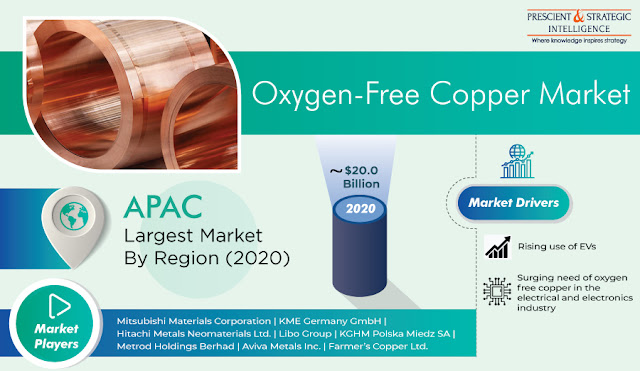
The Government of France has set up a target of increasing plug-in electric vehicle (PHEV) (passenger vehicles) and battery electric vehicle (BEV) (passenger vehicles) stock to 1.8 million and 3 million, respectively, by 2028. Likewise, Indonesia aims to expand the electric vehicle (EV) stock (passenger vehicles) to 2 million units by 2030. Similarly, the New Zealand government aspires to introduce 64,000 EVs (passenger cars) by 2025. The increasing number of EVs, on account of the growing need to reduce vehicular emissions, will, therefore, augment the need for oxygen-free copper products worldwide.

Moreover, the expanding electrical and electronics industry will also steer the oxygen-free copper market growth during the forecast period (2021–2030). According to P&S Intelligence, the market generated nearly ~$20.0 billion revenue in 2020. The growth of the electrical and electronics industry can be ascribed to the rising demand for consumer electronics, especially in developing countries, due to the mounting disposable income of people. For instance, the gross national disposable income of India increased from INR 1,73,15,933 crore during 2017–2018 to INR 1,92,37,943 crore during 2018–2019.

In the coming years, the electrical and electronics industry will utilize a significant volume of oxygen-free copper wires, busbars, strips, and rods to meet the booming demand for superconductors and semiconductors. Additionally, the surging power demand, on account of the growing global population, will also create a huge requirement for various types of oxygen-free copper products. In recent years, oxygen-free copper wires have been consumed in the highest quantity, due to their large-scale usage in vacuum seals, vacuum capacitors, vacuum interrupters, and microwave tubes. 

The grade segment of the oxygen-free copper market is bifurcated into oxygen-free and oxygen-free electronic. Under this segment, the oxygen-free bifurcation held the larger market share in 2020, and it is projected to maintain its lead in the forecast years as well. The dominance of this category can be attributed to the increasing use of oxygen-free copper in electromagnets, magnometers, and other semiconductors and magnifying demand for EVs, owing to the rising government support toward the EV industry. 

In recent years, oxygen-free copper providing companies have actively focused on acquisitions to offer this material to a greater number of customers. For instance, in February 2021, Mitsubishi Materials Corporation acquired a minority share in Mantoverde copper mine of Chile for $275 million. With this acquisition, the company will have a constant supply of high-quality copper concentrates with minimal impurities and a sustainable raw material portfolio of e-scrap and clean copper concentrates.

Therefore, the surging adoption of EVs and prospering electrical and electronics industry will facilitate the usage of oxygen-free copper all over the world in the upcoming years.

Why Is Cosmetic Chemical Demand Highest in Asia-Pacific?

From $457.734 in 1960, the global per capita income has risen to $10,910.084 in 2020. This means that on average, people have more to spend than 60 years ago. As a result, the sale of several products and services that were earlier only purchased via the wealthy, such as electrical appliances, consumer electronics, and automobiles, are being widely bought by the middle and even lower classes. Another kind of products that are now gaining a widening customer base are cosmetics.

Thus, P&S Intelligence expects the cosmetic chemicals market size, which was already $20.0 billion in 2020, to grow significantly in the years to come. Cosmetic is anything with or without actual health benefits that is used to enhance the appearance. Apart from the rising disposable income, the increasing appearance consciousness is propelling the usage of such products. The surge in the appearance consciousness is attributed to the growth in the influence of the Western culture via TV shows, magazines, and social media.

Further, with time, people have become aware of the ill-effects chemicals can have on the skin, which is why they are going for cosmetics marketed as organic and natural. This is prompting key cosmetics companies as well as chemical firms, such as The Dow Chemical Company, Ashland Inc., Givaudan S.A., Eastman Chemical Company, BASF SE, Lonza Group, LANXESS Deutschland GmbH, Solvay S.A., P&G Chemicals, Evonik Industries AG, Croda International Plc, Cargill Incorporated, and Bayer AG, to engage in extensive research and development (R&D) to come up with products that carry the same functional characteristics as conventional ones, but do not harm the skin.

Asia-Pacific is the dominant cosmetic chemicals market across the globe. Although North America and Europe have a higher disposable income and brand awareness, APAC registers the highest cosmetics sales because of its huge population. Therefore, to target the regional populace with cost-effective products, major cosmetics companies have their production plants here, which propels the consumption of the various chemicals that go into such products. Within the region, China is the largest cosmetics chemical consumer as it is home to the factories of many cosmetics manufacturers.

Hence, with the growing cosmetics production, the demand for associated chemicals will boom.

Why will Perovskite Solar Cell Market Demonstrate Huge Progress in North American Nations in Future?

Perovskites are basically a class of materials that have a similar structure and possess various characteristics such as magnetoresistance and superconductivity, owing to which, they are being increasingly used in solar cells for generating solar power. Furthermore, the perovskites-based solar cells offer greater convenience, in fabrication, and are available at much lower costs than the traditionally used solar cells. In addition to this, these solar cells provide excellent power conversion rates, which in turn, leads to higher efficiency in power generation. 

Besides the above-mentioned factors, the other reasons behind the soaring sales of perovskite solar cells (PSCs) are the surging awareness amongst the people about the various advantages offered by these cells over the conventionally used silicon photovoltaic (PV) systems and the rising number of research and development (R&D) activities being performed on PSCs. Moreover, the increasing popularity of solar energy is boosting the demand for affordable and efficient solar cells, which is in turn, propelling the growth of the global perovskite solar cell (PSC) market. 


Apart from solar panels, perovskite solar cells are majorly used in the applications pertaining to utilities, electronics, and smart glass. Out of these, the smart glass applications are expected to generate significant demand for perovskite solar cells in the coming years. This is predominantly attributed to the soaring utilization of the PSCs in glass windows, in order to generate electricity from the absorbed sunlight. According to Lance Wheeler, a solar energy expert working at the National Renewable Energy Laboratory in Colorado, the U.S., the glass windows of office and residential buildings have tremendous potential to create electricity.

In addition to being highly efficient, the other beneficial trait of the PSCs is their ability to be tuned in order to absorb light at specific frequencies. This tuning is done by altering the chemical recipe of the materials. This idea was put to practical use, when a team supervised by Richard Lunt, who is a chemical engineer in the Michigan State University, tuned the PSCs for developing an ultraviolet (UV)-absorbing perovskite-based solar window possessing a light-to-energy conversion efficiency of 0.5%.

Out of the Latin America, Asia-Pacific, North America, Middle East and Africa, and Europe regions, the perovskite solar cell market is predicted to exhibit substantial growth in North America in the forthcoming years. The main factors responsible for the ballooning demand for perovskite solar cells in the North American countries are the  soaring utilization of solar energy and the increasing number of research and development activities being conducted, especially in the U.S., in order to develop better and advanced PSCs. 

Therefore, it can be said with certainty that the sales of perovskite solar cells will skyrocket all over the world in the upcoming years, mainly because of the rising adoption of solar energy technologies and the increasing usage of PSCs for solar power generation in many countries around the world. 

Read More: https://www.psmarketresearch.com/market-analysis/perovskite-solar-cell-market

Smart Battery Charger Market to Witness Growth due to Increasing Smartphone Sales

The adoption of internet of things, along with its emphasis on data collection from distributed nodes, is increasing in almost all industries, including the agriculture industry. In the agriculture industry, smart farm relies heavily on several nodes that are spread across hundreds of acres for collecting data on soil moisture level, weather, evaporation, and other things. These nodes are usually are battery-powered and rely on techniques of energy harvesting, including solar power for supplementing existing battery capacity. Attributed to this, the demand for smart battery chargers is growing rapidly.

Smart battery chargers are much more sophisticated, since along with offering various switchable charging modes, they are further programmed to offer a varied and planned output to maintain and charge the battery in the best condition. Several smart chargers have numerous charging modes, tailored for different charging requirements and battery types. In addition smart chargers are programmed with several automated variations and steps for providing the best environment for the battery, so that it accepts a full charge. It is because of such advantages that the global smart battery charger market is projected to grow at considerable pace in the near future.

A smart battery charger has minimum of three charging staged, where the boost stage has basic smart charger, then the absorption stage, and at last, either maintenance or float stage of charging. These chargers comprise of high-tech features, including monitoring of batteries, charging process, voltage, and temperature and protection from overcharging. Smart battery chargers can further communicate with battery management systems of smart battery pack. Wired and wireless are the two types of smart battery chargers, between which, a significant demand is predicted to be created for wired chargers in the coming years. 

This is because these chargers are extensively utilized in several applications, such as smartphones and laptops, as they have low cost. Moreover, most electronic devices support wired smart battery chargers, thereby leading to their increasing demand. The major applications of smart battery chargers are tablets, smartphones, laptops, and electric vehicles. Out of all these, a substantial demand for these chargers is expected to be created for smartphones in the coming years, which is primarily because of the surging demand for smartphones across the globe. As per a Statista report, the global sale of smartphones reached approximately 1.5 billion in 2016 and is predicted to rise to 37% by 2020. 

When geographic scenario is taken into consideration, North America is predicted emerge as a major smart battery charger market in the near future, which can be owing to the surging adoption of electric vehicles and electronic devices in the region, particularly in the U.S. In addition to this, the sales of smartphones in the U.S. has been on a rise. For example, the sales of smartphones in the country was $55.6 billion in 2017, rising from $18 billion in 2010. This is further driving the demand for smart battery chargers in the region. 

Hence, the adoption of smart battery chargers is growing due to the increasing adoption of smartphones and growing utilization of IoT in the agriculture sector. 

What are Key Factors Responsible for Boom of Global Renewable Energy Market?

The reducing costs of renewable energy sources is one of the biggest factors responsible for their soaring utilization across the globe. In addition to this, the increasing number of investments being made for the development of clean energy is another important factor contributing toward the surge of the renewable energy market throughout the globe. For example, according to the Statista report of 2004, the investments on clean energy was found to be more than $45 billion during the same year. Moreover, in 2017, the clean energy investments all around the world were recorded to be $279.8 billion.

The increasing capacity of various renewable energy sources and the surging popularity of battery storage devices are the other major factors fuelling the rising demand for renewable energy sources across the world. Additionally, the increasing pollution levels and global warming caused due to the large-scale utilization of fossil fuels for power generation are expected to significantly boost the growth of the renewable energy market in future. Due to these factors, the global renewable energy market is predicted to demonstrate exponential growth in the coming years. 

The most commonly used types of renewable energy are wind energy, hydropower, solar energy, and bioenergy. Out of these, the adoption of solar energy is currently observed to be the highest in the world. Moreover, the solar energy category is registering huge growth in the renewable energy market. This is mainly ascribed to the declining costs of solar energy solutions and the increasing number of incentives and polices being implemented by the governments of several countries for encouraging the adoption of solar energy.

The increasing digitization, adoption of artificial intelligence (AI) and microgrid technologies, growing requirement of energy storage, and the reducing installation costs of renewable energy systems are some of the major trends presently being witnessed in the renewable energy market. Energy storage devices are being increasingly incorporated in renewable energy generation systems for ensuring a steady and smooth supply of power, especially during the extreme weather conditions. On the other hand, microgrids are used in these systems for providing energy efficiency, protection, and independence during emergency situations. The integration of AI in microgrid controllers enables continuous adaptation and improvements in operations.

Globally, the renewable energy market is currently registered substantial growth in the Asia-Pacific (APAC) region. This is primarily attributed to the increasing environmental damage caused because of the fossil fuels, high economic growth, and rapid urbanization in the various developing nations of APAC such as India and China. In addition to this, the soaring number of measures and initiatives being taken by the governments of several APAC countries for encouraging the adoption of renewable energy sources is causing huge growth of the renewable energy market in the region. 

Thus, the utilization of renewable energy sources will increase considerably throughout the world in the forthcoming years, on account of the surging pollution caused by the conventionally used power sources and the increasing demand for eco-friendly methods of power generation all over the world.

How Will Growing Personal Care Sector Facilitate Ethanolamine Production?

The burgeoning demand for personal care products, such as laundry detergents, soap bars, and shampoos, on account of the mounting disposable income of people and increasing availability of such products, will create a huge requirement for ethanolamines in the foreseeable future. Personal care product companies use this chemical as an emulsifying ingredient and surfactant. The Organisation for Economic Co-operation and Development (OECD) states that the per capita gross adjusted disposable income of Australia and the European Union (EU) stood at $42,700 and $33,445, respectively, in 2020.

Thus, the rising need for personal care products, on account of the escalating awareness consciousness and disposable income, will help the ethanolamines market progress at a CAGR of 5% during 2020–2030. According to P&S Intelligence, the market revenue will grow from $2,933.5 million in 2019 to $5,079.0 million by 2030. In contemporary times, diethanolamine (DEA) is preferred over monoethanolamine (MEA) and triethanolamine (TEA) due to the large-scale application of DEA in the production of glyphosate, soaps and detergents, herbicides, and surfactants and the treatment of natural gas and petroleum products.

Globally, the Asia-Pacific (APAC) region dominated the ethanolamines market in the preceding years, and it is expected to keep on the path in the foreseeable future. This can be majorly ascribed to the booming end-use industries in Vietnam, India, and Thailand owing to the abundant availability of affordable raw materials and labor in these countries. Additionally, the manufacturing sector of China consumes a notable volume of ethanolamines, which are primarily imported into the country from Thailand and Saudi Arabia.

Furthermore, the Rest of the World (RoW) is expected to adopt a considerable volume of ethanolamines in the forthcoming years due to the increasing construction of new production plants in Saudi Arabia and Brazil. Moreover, the expanding capacity of existing manufacturing facilities, to meet the burgeoning demand for finished products, will augment the consumption of this class of chemical in these countries, as will the rising penetration of ethanolamine producers in the region.

Thus, the soaring demand for personal care products and increasing requirement for agrochemicals will facilitate the production of ethanolamines in the upcoming years.

How is Construction Sector Steering Engine-Driven Welder Demand in U.S.?

The U.S. Energy Information Administration (EIA) states that around 535 million short tons of coal were produced in 22 states of the country. Further, the U.S. Geological Survey reveals that 190 tons of gold were mined in the country in 2020. The organization also states that 150 tons of beryllium were produced in the country in 2020. The surging mining activities in the U.S. will create an enormous requirement for engine-driven welders, as they are required to repair mining machinery, remove damaged parts or cracks, and generate electricity for power auxiliary operations in the absence of base electricity.

Additionally, the rising construction activities, primarily on account of the increasing number of housing projects, will help the U.S. engine-driven welder market grow at a CAGR of 6% during the forecast period (2019–2024). According to P&S Intelligence, the market was valued at $133.1 million in 2018, and it will generate more than $188.9 million revenue by 2024. The U.S. Department of Housing and Urban Development and the U.S. Census Bureau approved the construction of 1,598,000 buildings in October 2021.

The amperage segment of the U.S. engine-driven welder market is classified into 800 A and above, 600 A–799 A, 500 A–599 A, 400 A–499 A, 300 A–399 A, 200 A–299 A, and less than 200 A. Among these, the 300 A–399 A category generated the highest revenue in 2018, and it is also expected to exhibit the fastest growth throughout the forecast period, due to the wide application base of 300 A–399 A engine-driven welders in the pipeline works, commercial, industrial, and residential construction activities, and agricultural and industrial machinery maintenance.

Currently, the U.S. engine-driven welder market is consolidated in nature, with the presence of few players, such as Miller Electric Mfg. LLC, Airgas Inc., One Source Equipment Rentals Inc., A&B Welding Supply, Lincoln Electric Holdings Inc., Middlesex Welding Sales, Barnes Welding Supply, Hobert Welding Products, Cryo Weld, Service Welding Supply, WELDING SUPPLIES FROM IOC, Norco Inc., and TS Distributors Inc. In 2018, Hobert Welding Products, Miller Electric Mfg. LLC, and Lincoln Electric Holdings Inc. accounted for over 85% market share. 

Therefore, the expanding mining sector and surging construction activities will facilitate the adoption of engine-driven welders in the U.S. in the foreseeable future.

Why Are Healthcare Facilities Using Antimicrobial Coatings?

According to the European Centre for Disease Prevention and Control (ECDC), 8.3% of patients admitted to intensive-care units (ICUs) for more than two days were affected by at least one ICU-acquired healthcare-associated infection (HAI) in European countries in 2017. These patients were affected by HAIs such as urinary tract infection (UTI), pneumonia, and bloodstream infection. Similarly, the Centers for Disease Control and Prevention (CDC) estimates that on any given day, around 1 in 31 patients in hospitals of the U.S. have at least one HAI. 

To reduce the cases of HAIs, doctors around the world are using antimicrobial coatings, as they help in preventing the spread of viral, bacterial, and fungal particles on a surface. Thus, the surging concerns among healthcare professionals regarding HAIs are expected to drive the antimicrobial coatings market growth during the forecast period (2021–2030). According to P&S Intelligence, the market generated around $3.6 billion revenue in 2020. Moreover, the increasing implementation of government regulations on imparting knowledge on safety and hygiene will also contribute to the market growth worldwide.

The product segment of the antimicrobial coatings market is divided into surface modifiers and powder. Of these, the powder category accounted for a larger market share in 2020 because powder coatings can alter properties of surface materials by introducing biological, chemical, and physical attributes. In comparison to surface modifiers, powder coatings are less toxic and more durable. The powder category is further classified into copper, silver, and others, such as polymer, zinc-based compound, organic compound, and quaternary ammonium compound (QAC).

Geographically, North America held the largest share in the antimicrobial coatings market in 2020 due to the rising number of non-residential construction projects, such as academic/research institutions, schools, and hospitals. Besides, companies dealing in HVAC systems and indoor air quality focusing on coating their products to prevent microbial growth, owing to the increasing implementation of stringent hygiene regulations, which will also boost the market growth in the region.

Therefore, the soaring prevalence of HAIs and the surging research activities will encourage the adoption of antimicrobial coatings in the foreseeable future.

Why Do Pharmaceutical Companies Use Polyethylene Glycol in Capsule Production?

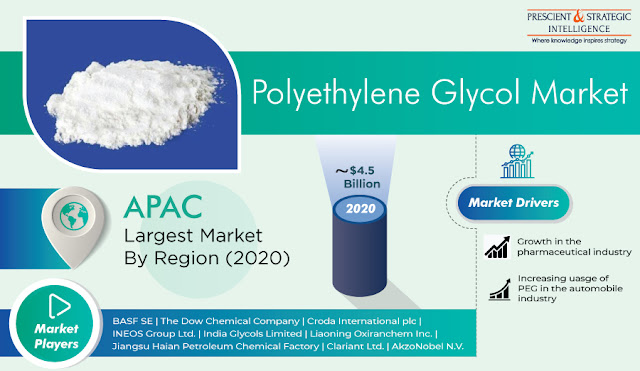
The pharmaceutical industry is witnessing a monumental growth in emerging economies, such as India, Brazil, and China, owing to which the consumption of polyethylene glycol (PEG) is increasing exponentially, as it is used as an inactive ingredient in the pharmaceutical sector. PEG is used as a surfactant, solvent, and suppository base for capsules and tablets. Additionally, the rapid technological advancements in the pharmaceutical sector will also facilitate the consumption of PEG in the forthcoming years.

Moreover, the escalating healthcare expenditure, on account of the surging cases of skeletal problems, obesity, hypertension, and cardiovascular diseases (CVDs), will also catalyze the polyethylene glycol market growth during the forecast period (2021–2030). According to P&S Intelligence, the market generated ~$4.5 billion revenue in 2020. The market growth can also be owed to the burgeoning demand for personal care products, as PEG is used as a specialty solvent and surface-active agent in creams and lotions, bath oils, toothpaste, deodorants, detergents, soaps, conditioners, shampoos, and lipsticks.

The application segment of the polyethylene glycol market is classified into industrial, medical, personal care, construction and infrastructure, and others, such as plastic, aerospace, and automotive. Under this segment, the medical category generated the highest revenue in 2020, due to the widening application base of PEG in the medical industry, owing to the soaring healthcare expenditure worldwide. For instance, the World Bank estimates that the global per capita healthcare expenditure increased from $1,405.843 in 2017 to $1,459.319 in 2018.  

In recent years, PEG producers have been engaging in facility expansions to cater to the needs of their existing and potential client base. For instance, in September 2019, BASF SE expanded its Verbund plant in Belgium to increase the manufacturing capacity of ethylene oxide and its derivatives to around 400,000 metric tons per year. Other companies focusing on facility expansion include India Glycols Limited, Huntsman Corporation, Croda International plc, Jiangsu Haian Petroleum Chemical Factory, BASF SE, Liaoning Oxiranchem Inc., The Dow Chemical Company, Clariant Ltd., INEOS Group Ltd., and AkzoNobel N.V.

Globally, the Asia-Pacific (APAC) region accounted for the largest share in the polyethylene glycol market during the historical period, and it is expected to retain its dominance during the forecast period as well. This can be owed to the expanding medical and pharmaceutical, building and construction, and automotive industries in the region. The increasing consumption of water-based paints, inks, and coatings in the construction sector is driving the PEG demand in the region. 

Thus, the flourishing pharmaceutical sector and growing healthcare expenditure will create an enormous requirement for PEG.

Mushrooming Biofuel Production Fueling Seed Treatment Demand

The soaring demand for food products, on account of the mushrooming population across the globe, is fueling the requirement for seed treatment products, as they assist in improving the productivity of crops. As per the United Nations (UN), the global population will surge from 7.7 billion in 2020 to around 8.9 billion by 2030. Seed treatment products are also used for protecting young plants and seedlings from various diseases and ensuring high crop yield.

Besides the aforementioned factor, the burgeoning requirement for biofuels, owing to the increasing environmental concerns over the deteriorating air quality level and escalating pollution levels, is also fueling the expansion of the seed treatment market. Different types of plants are used for producing biofuels. For example, bioethanol is made from the fermentation of the sugar produced from starchy crops, such as sugarcane. Thus, in order to make high quality biofuels, the seeds of the plants from which the sugar or oil is to be derived must be of high quality.

Across the world, the demand for seed treatment products was observed to be the highest in the Asia-Pacific (APAC) region in the years gone by and this trend is predicted to continue in the coming years as well. This is credited to the surging farming activities, including high-volume crop production, especially in Vietnam, India, China, Australia, and South Korea, and skyrocketing demand for high-quality agricultural produce to cater to the region’s large population.

Globally, the major players operating in the seed treatment market, such as Bayer AG, BASF SE, Germains Seed Technology, Croda International Plc, FMC Corporation, Novozymes A/S, Verdesian Life Sciences LLC, and Eastman Chemical Company, are focusing on product launches in order to gain an edge over their rivals. For example, Corteva Inc. developed Lumivia CPL, which is a non-neonicotinoid-based seed treatment product for peas, lentils, and cereals, in March 2020. This product uses an advanced method for managing pests.

Hence, the demand for seed treatment products will skyrocket in the coming years, primarily because of the surging need for higher agricultural productivity and biofuels across the world.

Why Are Automakers Using Physical Vapor Deposition Technology?

Physical vapor deposition (PVD) refers to a vacuum deposition process that can be used to fabricate thin films and surface coatings. In this process, the material changes from a condensed phase to a vapor phase and then again to a thin film condensed phase. Conventionally, PVD has been utilized at the industrial scale and combined with multiple methods to produce coatings with superior characteristics. In recent years, advancements in nanoscience have made the PVD technique more useful for the fabrication of micro-structure and nanostructured coatings.

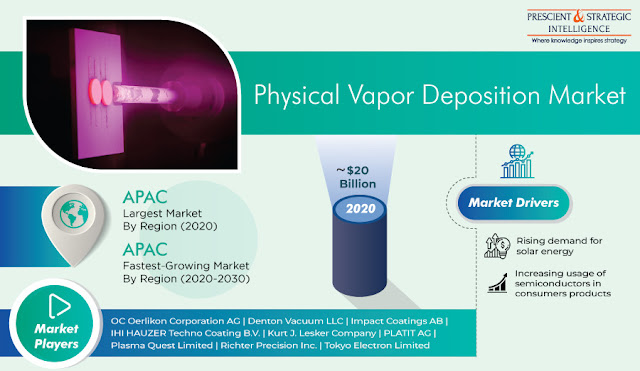
Currently, solar selective coatings produced by using the PVD technique are being consumed in large quantities, due to the rising focus of governments and individuals on generating electricity through solar energy. Coatings with high absorptance and low thermal emittance are being applied on solar panels to harness solar energy. Thus, the increasing deployment of solar cells and panels will catalyze the physical vapor deposition market growth during the forecast period (2021–2030).

In recent years, PVD equipment manufacturers, such as OC Oerlikon Corporation AG, Angstrom Engineering Inc., PLATIT AG, Denton Vacuum LLC, Plasma Quest Limited, Sulzer Ltd., Kurt J. Lesker Company, Tokyo Electron Limited, Advanced Energy Industries Inc., IHI HAUZER Techno Coating B.V., Applied Materials Inc., and Impact Coatings AB, have focused on introducing new products and acquisitions to augment their revenue. For instance, in July 2019, Applied Materials Inc. introduced Endura platforms, a PVD equipment, to produce novel memory technologies targeting cloud computing and the internet of things (IoT) technologies.

Geographically, the Asia-Pacific (APAC) region held the largest share in the physical vapor deposition market in 2020, and it is expected to demonstrate notable growth throughout the forecast period. This can be owed to the burgeoning demand for flash memory and dynamic random-access memory (DRAM) in China, Japan, and India. Additionally, the growth of the semiconductors industry, primarily on account of the increasing penetration of smartphones and laptops, will also support the market growth in the region. 

Thus, the rising shift toward solar power and soaring demand for lightweight vehicles will fuel the adoption of PVD technology worldwide.

Why Are Oil and Gas Companies Installing Pump Jacks in Aging Oilfields?

The U.S. Energy Information Administration (EIA) estimates that the production of crude oil in the U.S. increased by 12.7% from 2018 to 2019. As per the EIA, onshore production in the Lower 48 states increased from 3,141 million barrels (MMBbl) in 2018 to 3,591 MMBbl in 2019. The surge in onshore oil drilling activities can be ascribed to the low cost associated with the extraction process and the presence of a majority of the aging wells in onshore fields. Thus, the rising onshore oil drilling activities will facilitate the deployment of pump jacks in the forthcoming years.

Additionally, the increasing number of mature oil reserves, which cannot be economically restarted once they are shut down, will also help the pump jack market grow at a CAGR of 5.0% during the forecast period (2017–2023). According to P&S Intelligence, the market was valued at $2,712.8 million in 2016, and it will generate $3,800.0 million revenue by 2023. Deployment of pump jacks in oilfields allows the extraction of even the last drop of oil and extends the age of oil reserves by improving the pumping efficiency, without causing any increment in the operating expenditure.

The weight segment of the pump jack market is categorized into more than 300,000 lbs, less than 100,000 lbs, and between 100,000 lbs and 300,000 lbs. Under this segment, the 100,000 lbs to 300,000 lbs category accounted for the largest market share in 2016. Oil and gas companies select pump jacks on the basis of the depth of oil wells and pump jacks that weigh 100,000 lbs to 300,000 lbs are ideal for such wells, which have an average depth of 5,500–7,000 feet. 

Globally, North America accounted for the largest share in the pump jack market during the historical period (2013–2016), and it is expected to retain its dominance throughout the forecast period. This can be owed to the presence of established players and the existence of a significant number of mature oilfields in the region. Additionally, the burgeoning energy demand is also fueling the market growth in the region. Owing to these reasons, the North American market is also projected to demonstrate the fastest growth in the forecast years. 

Therefore, the surging onshore oil drilling activities and the soaring number of mature oilfields are expected to fuel the adoption of pump jacks in the upcoming years.

How Is Expanding Steel Industry Driving Charcoal Briquette Consumption in Asia?

The World Steel Association estimates that 563.3 million tons (Mt), 57.9 Mt, 35.2 Mt, and 15.0 Mt of steel was manufactured in China, India, South Korea, and Iran, respectively, during January 2021–June 2021. The high-volume steel production in these Asian countries creates a huge requirement for charcoal briquettes, as they can provide a high amount of heat during the manufacturing process. In recent years, charcoal briquettes have become an ideal substitute for conventional fuels due to their low production cost and environment-friendly property.

Moreover, the soaring popularity of barbecued food in Asian countries will drive the Asian charcoal briquettes market at a CAGR of 6.2% during the forecast period (2020–2024). The market revenue stood at $952.5 million in 2019, and it is projected to reach $1,158.4 million by 2024. Globalization has increased the popularity of the barbecue culture in Asian countries, owing to which restaurants, hotels, and households are preparing it in abundance. The usage of charcoal briquettes gives a caramelized exterior and smoky flavor to the food.

The type segment of the Asian charcoal briquettes market is classified into round, octagonal, hexagonal, coconut shell, and others, such as pillow-shaped, shisha, and hookah. Among these, the hexagonal category generated the highest revenue in 2019 due to the increasing preference for such variants among hotels and restaurants for the preparation of barbecued food, as this shape offers uniform heating during grilling. Additionally, the abundant availability of these charcoal briquettes, owing to the easy conversion of non-uniformly shaped charcoal to the hexagonal shape, supports the growth of this category.

Whereas, Japan is expected to register the fastest growth in the Asian charcoal briquettes market during the forecast period. This can be primarily credited to the burgeoning demand for barbecue food in the country. Besides, the presence of a large manufacturing base and extensive steel production will facilitate the market growth in Japan. According to the World Steel Association, Japan is one of the leading steel manufacturers in the world, producing 48.1 Mt between January 2021 and June 2021.

Therefore, the surging steel production and rising preference for barbecued food will augment the consumption of charcoal briquettes in Asian countries.

Why Are Governments Mandating Fuel Additives Usage?

The United States Environmental Protection Agency (EPA) mandates the registration of all diesel and gasoline motor vehicle fuel additives in accordance with the regulations under 40CFR 79. As per the EPA, gasoline used in the U.S. must contain detergent additives that are certified as per the norms of Subpart G of 40 CFR 80. This agency has listed the registered diesel and gasoline additives at Registered Fuels & Fuel Additives Under 40 CFR Part 79. Similarly, the Canadian Environmental Protection Act (CEPA) Environmental Registry mandates the usage of non-lead fuel additive content in Canada.

Enforcement of such stringent government regulations regarding the usage of fuel additives in several countries to reduce emissions is expected to drive the fuel additives market at a CAGR of 4.9% during the forecast period (2021–2030). The market was valued at $5,032.7 million in 2020, and it is projected to generate $7,990.6 million revenue by 2030. Additionally, the burgeoning demand for fuel additives can also be attributed to the large-scale consumption of this product in cold countries to prevent the fuel from freezing. 

In contemporary times, the aviation, automobile, industrial, and marine sectors use fuel additives such as antioxidants, cetane improvers, cold flow improvers, deposit controls, icing inhibitors, and lubricity additives, to lower emission levels, increase the flow, control deposits, and improve the cetane and octane numbers of fuels. In the recent past, end users preferred deposit controls over other fuel additives as they are used for diesel as well as gasoline fuel. Owing to their multiple uses, huge volumes of deposit controls will be consumed in the upcoming years.  

The application segment of the fuel additives market is categorized into gasoline, diesel, marine fuel, aviation fuel, and others. Under this segment, the diesel category generated the highest revenue in 2020, and it is also expected to demonstrate healthy growth in the forecast years. This can be majorly attributed to the high public preference for diesel vehicles over gasoline variants. Moreover, the large-scale usage of diesel in generators and as marine fuel also contributes to the growth of this category. 

Currently, fuel additive producers are entering into partnerships and introducing new products to offer several fuel additives for gasoline and diesel to their customers. For instance, in July 2020, Clariant International Ltd. entered into a partnership with Ineratec GmbH to produce and commercialize renewable chemicals and fuels. Clariant provides the catalyst to convert carbon dioxide to valuable fuels, additives, and chemicals.  Through this partnership, Clariant International Ltd. gets an opportunity to produce and market environment-friendly products.

According to P&S Intelligence, the Asia-Pacific (APAC) region accounted for the largest share in the fuel additives market in 2020, and it will continue this trend throughout the forecast period. This can be primarily owed to the growing petrochemical industry in the region. In the APAC market, China generates the highest revenue, due to the continuous research and development (R&D) activities being conducted for the creation of advanced products and the presence of a flourishing automobile sector in the country. 

Therefore, the increasing government focus on reducing emission levels will facilitate the consumption of fuel additives globally.